Servant Leadership in System Context
The reinvention of leadership from controller to system architect, with leaders focused on removing the physical blockers around teams instead of managing budgets alone.
Why it matters
Interventions matter when they do more than ease symptoms and instead shift system behavior sustainably.
Next step
Link the intervention to tools and decision rituals so it remains effective in day-to-day work.

System Problem
In traditional IT shaped by Taylorist thinking, the manager is the thinker and the team is the executor. The manager watches burndown charts and asks why people are not finished yet. That harmful model does not scale in modern infrastructure. The system is far too complex for one manager to micromanage architecture from above. Clinging to command-and-control creates bottlenecks at the top, dishonest status reporting, and deeply demotivated engineers.
Intervention
"Servant Leadership" turns the pyramid upside down. The IT leader, whether CTO, VP Engineering, or lead architect, no longer sees the core job as assigning tickets but as designing the system around the teams. The intervention requires leaders to flatten the playing field: building psychological safety, removing approval barriers, and protecting developers' focus time from external attacks. The leader serves the flow of the team.
Expected Impact
Teams evolve from obedient service providers into genuinely autonomous problem solvers. Because the leader gives context rather than step-by-step answers, the team chooses tools and approaches for itself. Speed increases because the endless delays created by waiting for managerial permission disappear. Leaders spend their time breaking cross-company dependencies instead of policing formatting.
Side Effects and Risks
The major trap is laissez-faire chaos. Inexperienced managers sometimes hear servant leadership and conclude that they should stop setting direction. But total freedom without a strong and explicit system goal leads to fragmentation, polyglot sprawl, and architectural drift. Healthy servant leadership combines hard guardrails with wide autonomy inside them.
Diagram
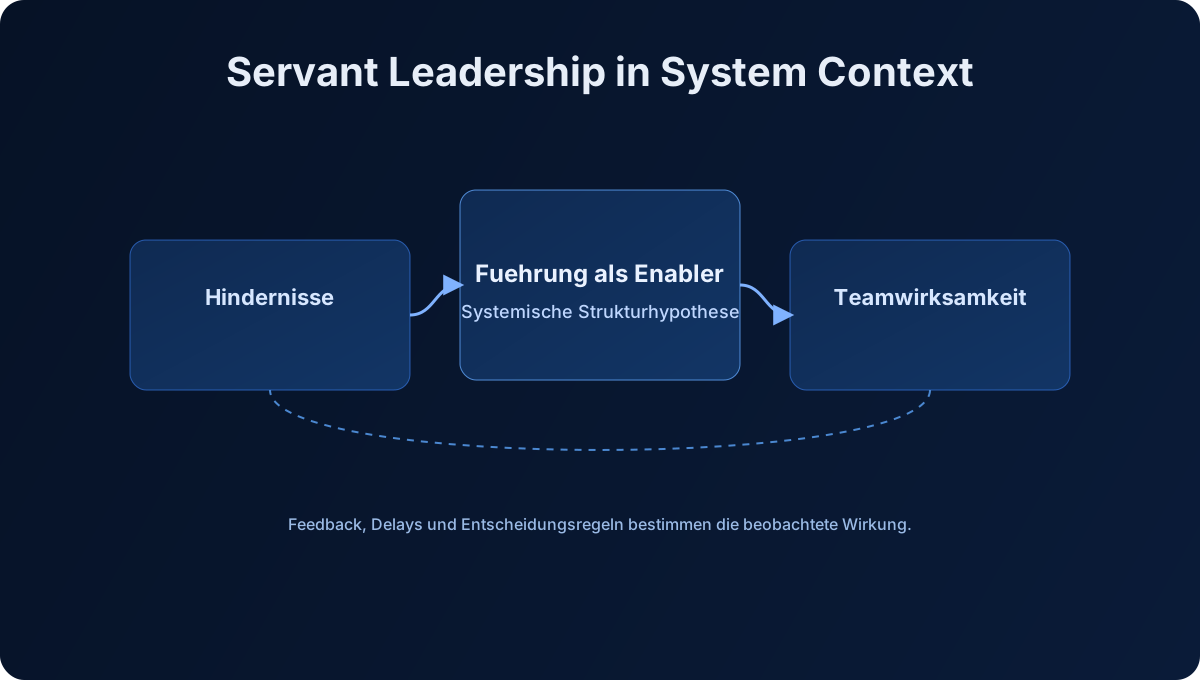
When This Intervention Becomes Effective
Peter Senge argues in The Fifth Discipline that leaders in learning organizations act as designers, teachers, and stewards. A leader-designer does not steer the submarine directly. They shape the architecture of the submarine and the organization around it so the crew can operate well. In systems terms, they maintain the quality of the feedback loops rather than grabbing the wheel every minute.
What Distinguishes This Intervention from Other Levers
Rule Redesign changes the laws governing deployment or approvals. Servant Leadership changes the manager's role identity itself, from gatekeeper to enabler.
How to Introduce the Intervention Cleanly
Destroy the question "When will feature X be done?" and replace it with "What system obstacle is blocking you most today, and how can I remove it by tomorrow morning?" If ten developers are blocked by a slow CI/CD runner, it is the servant leader's job to clear the budget or process barrier that stands in the way.
First Implementation Steps
Make psychological safety one of the top metrics for leadership. If a junior engineer is too afraid of the CTO to admit in a post-mortem that they copied the wrong server name, then leadership has failed completely. A servant leader models the opposite by publicly owning their own mistakes.
How to Recognize Impact
Are engineering managers and leads primarily evaluated on how much they improve developer experience and end-to-end cycle time, rather than only on pure feature output?
Sources
Robert Greenleaf — Servant Leadership (Paulist Press, 1977)
Peter Senge — The Fifth Discipline, Ch. 13: The Leader's New Work
Authors & Books
Go to referencesRelevant references for Servant Leadership in System Context.
Leverage indicator
Leverage level 11 · Buffer sizes
Category: Structure
Go to interventions wheelContinue reading
Explore related topics from Interventions
Boundary Design
The physical and logical redrawing of boundaries such as APIs and team structures to drastically reduce friction and handoffs across the system.
Boundary Reframing
The strategic act of showing management that it shares responsibility for the current architecture problem because it defined the observation space too narrowly.