Boundary Reframing
The strategic act of showing management that it shares responsibility for the current architecture problem because it defined the observation space too narrowly.
Why it matters
Interventions matter when they do more than ease symptoms and instead shift system behavior sustainably.
Next step
Link the intervention to tools and decision rituals so it remains effective in day-to-day work.

System Problem
In failed projects, people often say, "The architecture is not working as intended." But the real issue is usually that the problem boundary was placed in the wrong frame of reference. If developers complain that the database is too slow and management orders bigger servers, the frame is stuck on hardware. If the real root cause is a broken user experience that drives endless clicking and query spam, then the chosen frame is simply too narrow.
Intervention
"Boundary Reframing" forces stakeholders to zoom the problem space out or shift it altogether. It is the architect's refusal to accept an isolated symptom as a self-contained problem. You actively move the boundary from technology to organization, or from my team to the entire enterprise. In doing so, you force management to put the dismissed externalities back into the equation.
Expected Impact
Seemingly impossible local problems can suddenly disappear because they get resolved at a higher systemic level. Endless database debugging stops once the problem is reframed as a user-experience issue and the wasteful frontend requests are designed out of the system. Budgets that were reserved for local firefighting can then be redirected toward structural improvements.
Side Effects and Risks
The greatest risk is scope creep. If you expand the frame from "the database is broken" to "the company's whole business process is broken," you may end up boiling the ocean. Teams become responsible for problems so large that they freeze. Reframing can also trigger political resistance when leaders realize that their supposedly local problem is rooted in decisions made by another department or by themselves.
Diagram
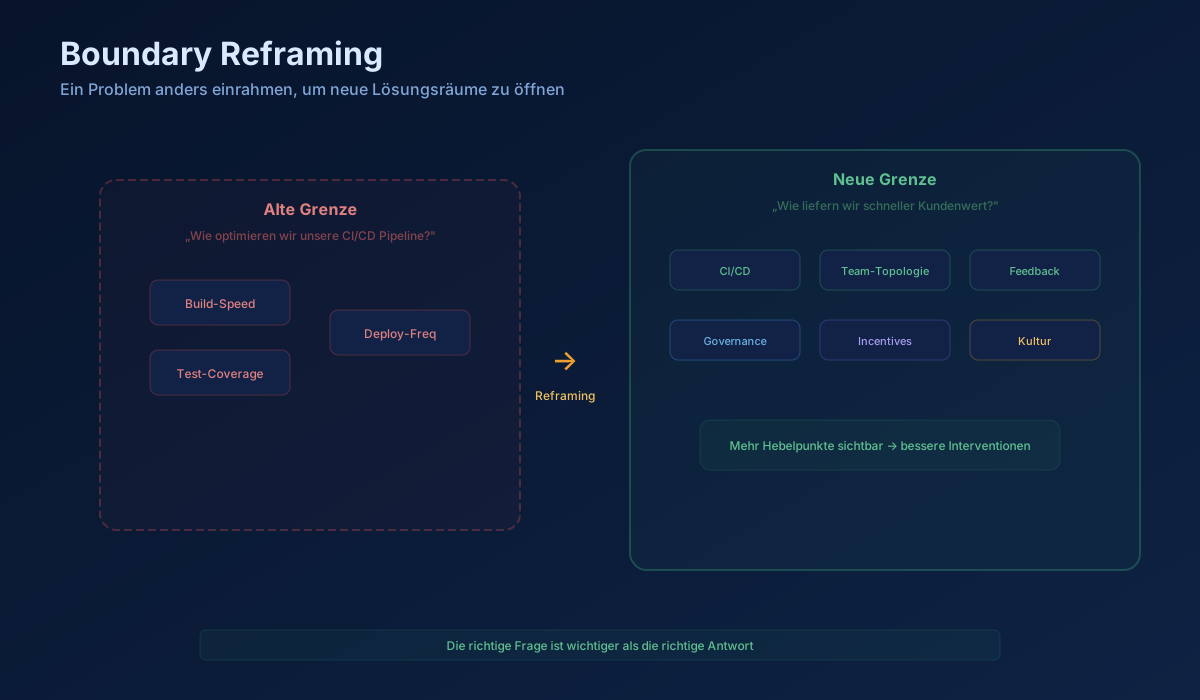
When This Intervention Becomes Effective
One of the strongest moves in systems thinking is transcending paradigms. Boundary reframing is often the preparation for that. It prevents the classic architectural trap of sub-optimization, where one microservice team saves half a millisecond in an algorithm while the end user still loses 200 milliseconds in network latency.
What Distinguishes This Intervention from Other Levers
Boundary Design, the physical restructuring of teams and code, can only happen after Boundary Reframing has taken place. Reframing is the cognitive click in management's mind. It takes the problem out of the wrong drawer. Only once everyone agrees that "this is not an ops problem, this is a requirements problem" can the actual design work begin.
How to Introduce the Intervention Cleanly
When someone says in a meeting, "That is outside our scope," answer directly: "Then our scope is fundamentally wrong." Once a month, have the project team list the issues they quietly sweep under the rug because they assume nothing can be done about them. Pick the worst one and deliberately pull it back into the project plan through reframing.
First Implementation Steps
Use the upstream versus downstream metaphor. If the operations team is constantly drowning downstream, patching boats is the wrong boundary. Reframing requires walking upstream to the developers and declaring the quality of code handoffs to be the real, shared system goal.
How to Recognize Impact
Do we have a clear facilitation process in our architecture bottlenecks that prevents us from pouring millions into a technical fixes-that-fail scenario simply because we refused to widen the organizational frame?
Sources
Gerald Midgley — Systemic Intervention, Ch. 5: Boundary Judgments (Springer, 2000)
Werner Ulrich — Critical Heuristics of Social Planning (Haupt, 1983)
Authors & Books
Go to referencesRelevant references for Boundary Reframing.
Leverage indicator
Leverage level 11 · Buffer sizes
Category: Structure
Go to interventions wheelContinue reading
Explore related topics from Interventions
Boundary Design
The physical and logical redrawing of boundaries such as APIs and team structures to drastically reduce friction and handoffs across the system.
Capability Building over Fixes
A strict architectural ban on local quick fixes and self-service, with all energy redirected toward giving the system the fundamental ability to repair itself.