Capability Building over Fixes
A strict architectural ban on local quick fixes and self-service, with all energy redirected toward giving the system the fundamental ability to repair itself.
Why it matters
Interventions matter when they do more than ease symptoms and instead shift system behavior sustainably.
Next step
Link the intervention to tools and decision rituals so it remains effective in day-to-day work.

System Problem
Development teams become addicted to quick fixes. If a database query is slow, the lead developer quickly puts Redis in front of it and the pain goes away for a moment. But the team still has not built the underlying capability to design proper indexing strategies. At the next problem, they again need an external external helper or yet another tool. The system grows more complex and fragile, while developers slowly lose conceptual depth.
Intervention
"Capability Building over Fixes" is a management veto. Every quick fix is met with the question: "What systemic capability is missing in the affected team that would prevent this problem from recurring?" Instead of simply taking over a bug fix for a junior developer, the organization may pause the fix long enough for a senior engineer to pair with them and build real testing or debugging capability. The intervention invests in self-service and in the company's learning infrastructure.
Expected Impact
Velocity often drops sharply at first because teams now have to repair things properly at the root. Over time, however, the Accelerate effect appears: teams stop merely resolving incidents and begin automating whole paths of problem-solving through CI/CD toolkits, infrastructure-as-code templates, and reusable practices. Support tickets to platform architects can collapse because teams become able to operate independently.
Side Effects and Risks
Market pressure on the C-level is the biggest risk. Capability building consumes time and resources and can slow release cycles by weeks or months. For a startup fighting for survival, insisting on capability building everywhere can be problematic. The art lies in judging where a real capability investment is worth it and where a pragmatic local fix is acceptable in an aging legacy module.
Diagram
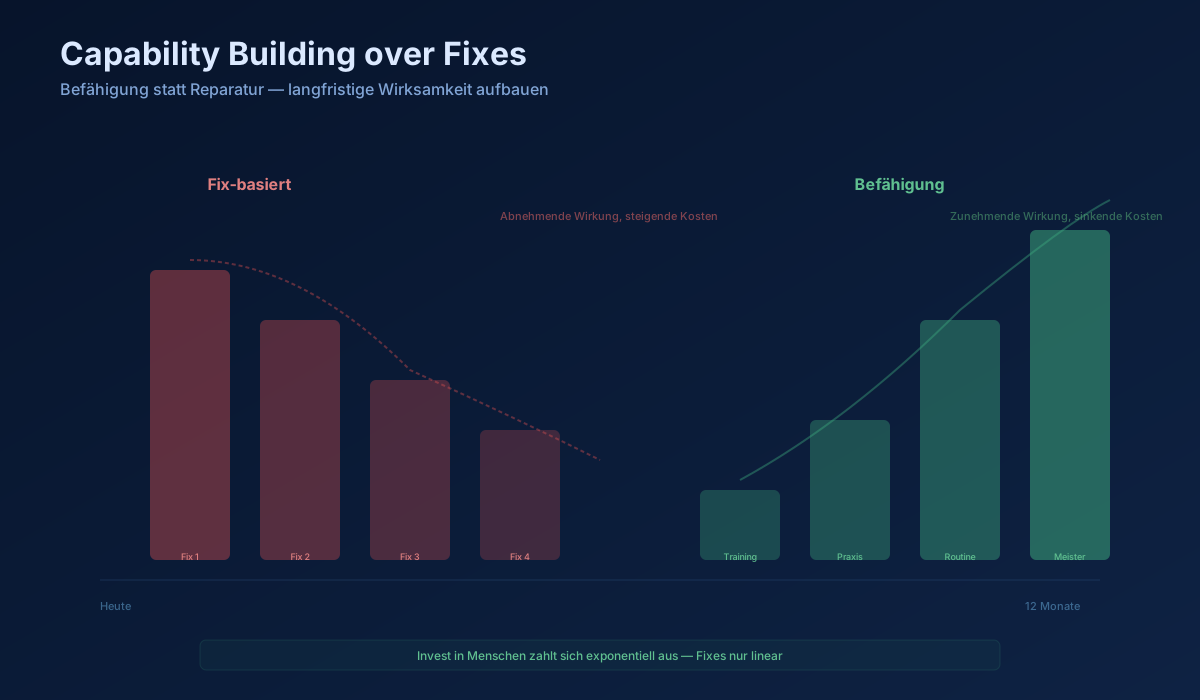
When This Intervention Becomes Effective
In DevOps research, particularly the DORA metrics and Accelerate, capability is the real foundation of high-performing organizations. Weak companies maintain catalogs of approved technologies. Strong companies cultivate catalogs of capabilities, such as the ability to test automatically or the ability to recover the system within an hour. Tools change every two years. Capabilities can last for decades.
What Distinguishes This Intervention from Other Levers
Delay-Aware Governance helps management survive the uncomfortable period while these capabilities are being built. But the actual replacement of self-service and durable competence belongs to Capability Building over Fixes.
How to Introduce the Intervention Cleanly
Establish a clear "Do-It-For-Me" versus "Do-It-Yourself" model for platform teams. Platform teams may directly solve tickets for other teams only when the house is literally on fire. Their normal job is to provide APIs, documentation, and tools that let product teams solve the issue themselves.
First Implementation Steps
Make capability acquisition measurable. Create an engineering skills heatmap or adopt DORA metrics such as MTTR and lead time for changes as hard OKRs. A tribe leader should not be promoted because releases ship on schedule while the team burns out, but because they moved the team's continuous delivery capability from one maturity level to the next.
How to Recognize Impact
Do retrospectives clearly distinguish between investment in workaround structures and the creation of durable engineering capabilities that would still hold if traffic doubled?
Sources
Peter Senge — The Fifth Discipline, Ch. 7: Shifting the Burden
Donella Meadows — Thinking in Systems, Ch. 6: Living in a World of Systems
Gene Kim et al. — Accelerate, Ch. 4: Capabilities (IT Revolution, 2018)
Authors & Books
Go to referencesRelevant references for Capability Building over Fixes.
Leverage indicator
Leverage level 11 · Buffer sizes
Category: Structure
Go to interventions wheelContinue reading
Explore related topics from Interventions
Boundary Design
The physical and logical redrawing of boundaries such as APIs and team structures to drastically reduce friction and handoffs across the system.
Boundary Reframing
The strategic act of showing management that it shares responsibility for the current architecture problem because it defined the observation space too narrowly.