Portfolio Deprioritization
The deliberate reduction of parallel IT initiatives so throughput, focus, and delivery capability improve across the whole system.
Why it matters
Interventions matter when they do more than ease symptoms and instead shift system behavior sustainably.
Next step
Link the intervention to tools and decision rituals so it remains effective in day-to-day work.

System Problem
In most companies, management falls into the resource-utilization trap. It sees 100 developers and starts 50 priority-one projects so everyone looks busy. Little's Law tells a harsher truth: once utilization climbs too high, flow collapses into traffic jam. Projects block each other in QA, feature branches rot for months, and context switching damages the remaining concentration of engineers.
Intervention
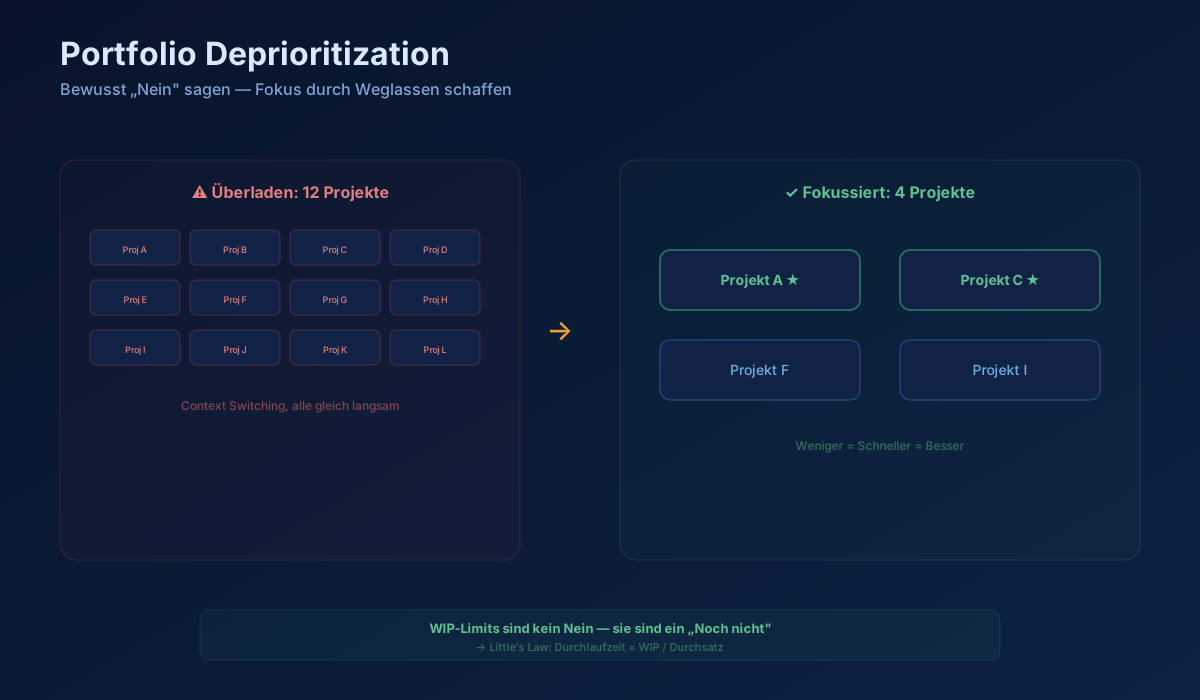
"Portfolio Deprioritization" is a work-in-progress limit at the portfolio level. The intervention is deliberate: pause part of the ongoing work so the remaining initiatives can be completed with enough focus. The point is not local utilization optimization, but restoring flow across the whole portfolio.
Expected Impact
The portfolio traffic jam begins to clear step by step. Although the company operates fewer parallel projects on paper, it can complete more relevant work in less time. Lead time falls. Code quality often rises too because engineers and supporting specialists are no longer spread across dozens of concurrent priorities.
Side Effects and Risks
The side effects are mostly political. Many paused projects have sponsors, status, or bonus logic attached to them. When projects are deprioritized, managers may try to keep their initiatives alive through side channels. Portfolio deprioritization therefore works only when leadership protects the decision consistently and prevents resources from being redistributed informally.
Diagram
When This Intervention Becomes Effective
This intervention is pure queueing theory. In development, the inventory is invisible because the stock is code and half-finished knowledge, not physical goods. A partially completed feature branch is expensive waste: it has already consumed salary, creates no customer value, and blocks others through merge conflicts and mental overhead. Deprioritization stops the production of that waste.
What Distinguishes This Intervention from Other Levers
Dependency Mapping and Bottleneck Design help expose where the congestion actually lives. Portfolio Deprioritization is the emergency switch that prevents the company from continuing to flood the known bottleneck with new work.
How to Introduce the Intervention Cleanly
Enforce a hard pull principle. If the board proposes a new AI initiative, bring out the ranked priority list and ask which existing project will be removed to make room. In systems thinking, there is no such thing as "on top" work without a cost somewhere else.
First Implementation Steps
Make the stop line psychologically hard. If teams try to sneak frozen projects back in on Fridays or in spare moments, treat that rule-breaking as seriously as a production incident. Optimize for flow, not for the appearance that every resource is busy.
How to Recognize Impact
Do we have an immutable top-down limit on the total number of active epics in the company, beyond which the system simply refuses to approve more project budget?
Sources
Donald Reinertsen — The Principles of Product Development Flow (Celeritas, 2009)
Gene Kim et al. — The Phoenix Project, Ch. 14: WIP Limits (IT Revolution, 2013)
Authors & Books
Go to referencesRelevant references for Portfolio Deprioritization.
Leverage indicator
Leverage level 11 · Buffer sizes
Category: Structure
Go to interventions wheelContinue reading
Explore related topics from Interventions
Boundary Design
The physical and logical redrawing of boundaries such as APIs and team structures to drastically reduce friction and handoffs across the system.
Boundary Reframing
The strategic act of showing management that it shares responsibility for the current architecture problem because it defined the observation space too narrowly.