Paradigm Shift
A very strong leverage point in systems theory: deliberately changing the mental model from which architecture decisions emerge.
Why it matters
Interventions matter when they do more than ease symptoms and instead shift system behavior sustainably.
Next step
Link the intervention to tools and decision rituals so it remains effective in day-to-day work.

System Problem
A paradigm is the unspoken foundation on which a company's architecture rests. If the paradigm says quality comes from months of testing by a specialized department, then the whole system is trapped inside that belief. Any intervention that stays within the paradigm, such as buying more tools for QA or running faster scrum meetings, can achieve only cosmetic improvement. The system stagnates at the performance limit of its worldview.
Intervention
"Paradigm Shift" corresponds to one of the highest leverage points in Meadows's hierarchy. The intervention changes not only rules or goals, but the mental model itself. A CTO might make clear: "We no longer believe that quality is created mainly through long testing phases. We assume that quality emerges through small changes, fast feedback, and proximity to production." The intervention does not merely ask for better behavior in the old system; it creates a new basis for decisions.
Expected Impact
When the paradigm moves, the lower levers beneath it can rearrange themselves with surprising speed. In a continuous-deployment paradigm, a separate six-month QA stage no longer makes sense, so it starts to dissolve. Feature flags, observability, and fast rollback become obvious rather than radical. Delivery capability that once seemed impossible can begin to look normal.
Side Effects and Risks
The main danger is a strong immune response. Thomas Kuhn showed that scientific revolutions are often resisted by people whose identity or status depends on the old worldview. The same applies in companies. A paradigm shift therefore needs clear leadership, good change work, and examples that make the new model practically tangible.
Diagram
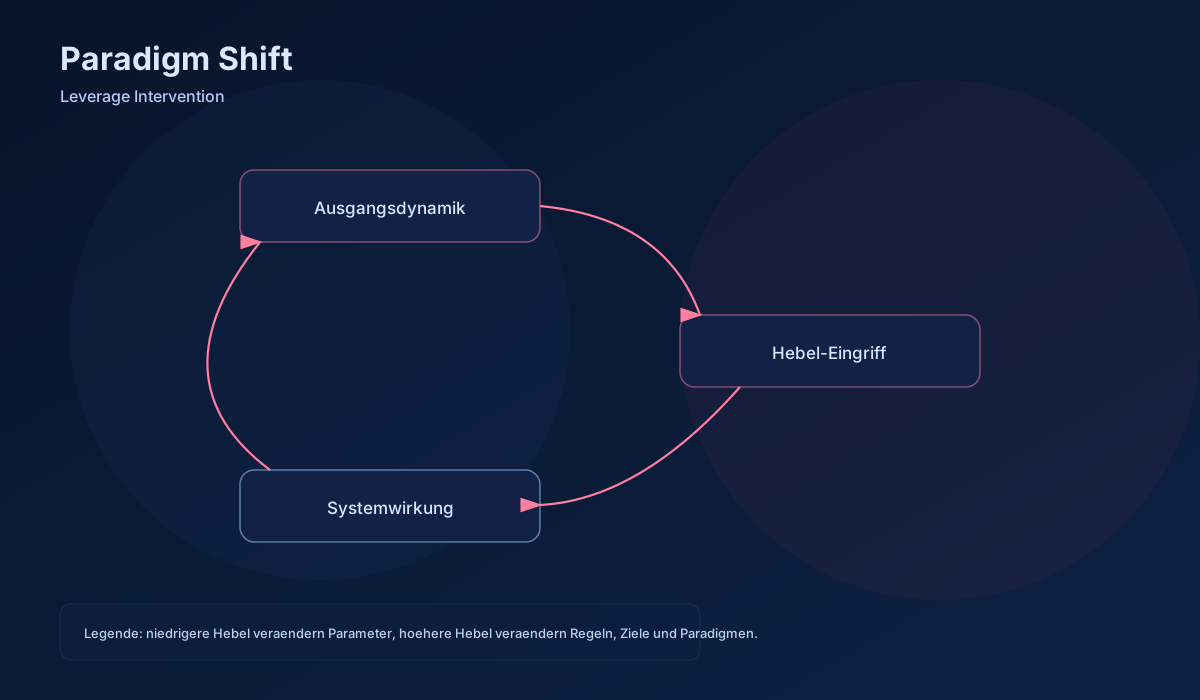
When This Intervention Becomes Effective
One of the strongest paradigm shifts in IT history was the move from pet servers to cattle-style cloud infrastructure. In the old paradigm, an unhealthy server was lovingly repaired. In the cloud paradigm, it is terminated and replaced automatically. That single mental image made chaos engineering, Kubernetes, and serverless models feel natural rather than absurd.
What Distinguishes This Intervention from Other Levers
Goal Reframing changes what success means inside the current universe. Paradigm Shift changes the universe itself. Instead of saying "we want more quality than features," it says, "we now believe failure in production is inevitable and we optimize for fast recovery rather than for impossible perfection."
How to Introduce the Intervention Cleanly
A paradigm rarely moves through lectures alone. It shifts through shock or through exposure to anomalies that the old worldview cannot explain. Show management a living competitor that deploys thousands of times per day without collapse. Once reality contradicts their belief strongly enough, the old paradigm starts to crack.
First Implementation Steps
Leave the old system physically and socially if needed. New paradigms are rarely born at headquarters. If you want to establish a new architectural worldview, create a pilot team far enough away from the guardians of the old regime that it can survive long enough to prove the new model.
How to Recognize Impact
When was the last time our architecture board officially declared one of its deepest beliefs dead and replaced it with a new doctrine?
Sources
Thomas Kuhn — The Structure of Scientific Revolutions (Chicago UP, 1962)
Authors & Books
Go to referencesRelevant references for Paradigm Shift.
Leverage indicator
Leverage level 2 · Paradigm of the system
Category: Paradigm
Go to interventions wheelContinue reading
Explore related topics from Interventions
Boundary Design
The physical and logical redrawing of boundaries such as APIs and team structures to drastically reduce friction and handoffs across the system.
Boundary Reframing
The strategic act of showing management that it shares responsibility for the current architecture problem because it defined the observation space too narrowly.