Leverage Points
The strategic focal concept of systems theory: the places within a complex IT landscape where a tiny intervention can trigger outsized architectural change.
Why it matters
Interventions matter when they do more than ease symptoms and instead shift system behavior sustainably.
Next step
Link the intervention to tools and decision rituals so it remains effective in day-to-day work.

System Problem
Most architects work on the wrong parts of the system. They spend weeks debating parameters and numbers, such as the size of a database connection pool or whether AWS is cheaper than Azure. These decisions consume time but barely change the system's underlying behavior. If a company suffers from a harmful information bottleneck between frontend and backend, shaving 10% off server cost will not save it. Leadership wastes force on the weakest levers.
Intervention
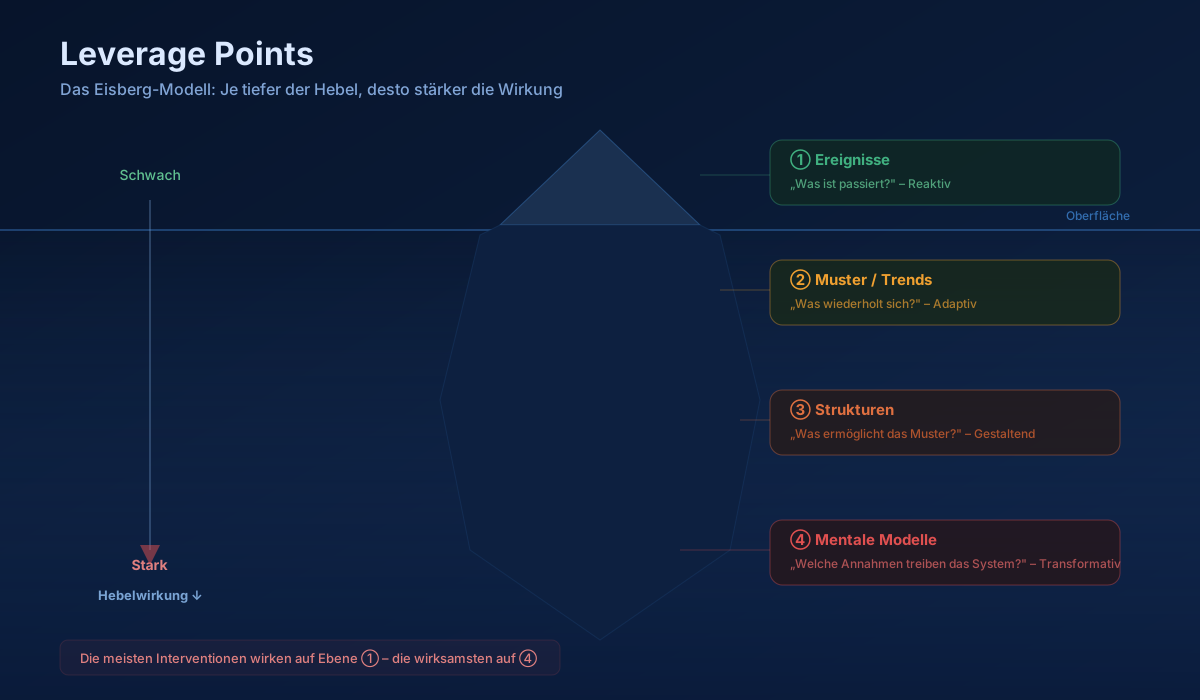
The leverage points described by Donella Meadows form a strict hierarchy of twelve places to intervene in a system. The intervention is simple but demanding: refuse to spend your energy on weak levers such as parameter tuning or cache sizes until you have examined the stronger ones. Those stronger levers include changing rules, redesigning information flows, and, at the very top, reframing the goal and paradigm of the system itself.
Expected Impact
The return on architectural work can rise dramatically. Instead of rewriting endless legacy code to change a weak constant, you might align the goals of a neighboring team around resilience and watch many technical problems start resolving under the new incentives. Rather than fighting the system head-on, you make the system begin working for you.
Side Effects and Risks
The higher you climb toward powerful leverage points such as changing the project goal or paradigm, the stronger the immune response of the organization becomes. Nobody resists a new caching layer. But if you propose replacing "time to market" with "quality and user trust" as the core metric, you may trigger fierce political backlash across the executive layer. High leverage usually means high resistance.
Diagram
When This Intervention Becomes Effective
This typology is one of the masterworks of systems thinking. Meadows distinguishes twelve levels. In an IT context, typical examples look like this:
Level 12, weakest leverage, constants and parameters: set a timeout to 30 seconds.
Level 9, weak leverage, buffer sizes: double the AWS cluster.
Level 6, strong leverage, information flows: stream errors directly into the developers' workspace.
Level 5, very strong leverage, rules: forbid merges without pair programming.
Level 3, royal leverage, the goal: move from "we ship features fast" to "we run failure-resistant systems."
What Distinguishes This Intervention from Other Levers
Leverage Points is not a single intervention but the meta-guide for all diagnosis tools and interventions used by architects. Before choosing an expensive intervention, you can evaluate it against the twelve leverage points and ask whether you are truly acting at the right level.
How to Introduce the Intervention Cleanly
Print out Donella Meadows's twelve leverage points and hang them in every architecture meeting room. Whenever a discussion drifts into narrow tool arguments, pull the group back up the ladder. Ask who actually owns the information flow and what the true business goal of the architecture is before allowing the meeting to disappear into low-leverage tuning.
First Implementation Steps
Be careful: a strong leverage point used in the wrong direction is still dangerous. Silencing end-user feedback to save costs is also a high-leverage move, just a destructive one. High leverage without systemic diagnosis is a hand grenade. Analyze first, then pull the lever.
How to Recognize Impact
Can our tech leads instinctively distinguish between symptom treatment at a weak lever, such as hardware upgrades, and root-cause intervention at a strong lever, such as changing information feedback loops?
Sources
Donella Meadows — Leverage Points: Places to Intervene in a System (1999)
Authors & Books
Go to referencesRelevant references for Leverage Points.
Leverage indicator
Leverage level 11 · Buffer sizes
Category: Structure
Go to interventions wheelContinue reading
Explore related topics from Interventions
Boundary Design
The physical and logical redrawing of boundaries such as APIs and team structures to drastically reduce friction and handoffs across the system.
Boundary Reframing
The strategic act of showing management that it shares responsibility for the current architecture problem because it defined the observation space too narrowly.