Governance Feedback Cadence
The orchestration of the company's heartbeat by adjusting how often and how quickly IT leadership reviews architectural signals and reacts.
Why it matters
Interventions matter when they do more than ease symptoms and instead shift system behavior sustainably.
Next step
Link the intervention to tools and decision rituals so it remains effective in day-to-day work.

System Problem
Two lethal extremes shape IT governance. In one extreme, the architecture board meets only when necessary or every six months, so management notices failure only after millions have been burned. In the other extreme, executives read Jira burn-down charts hourly and email teams every day, creating panic, killing psychological safety, and amplifying oscillation. Both rhythms are destructive.
Intervention
"Governance Feedback Cadence" is the search for the right control frequency for each layer of the system. It tunes the reporting rhythm to the lifecycle of what is being governed. A CI/CD pipeline check should happen in seconds. Sprint velocity might be reviewed weekly. Strategic cloud-architecture direction belongs in a hard quarterly governance rhythm. These cadences must be deliberately separated.
Expected Impact
Organizational noise drops. Teams no longer get dragged into all-hands meetings for every small coding hiccup because they know the relevant tactical review is scheduled in the proper forum. They gain protected focus time. At the same time, architects can trust that deeper drift will still be caught on a strategic cadence before it becomes severe.
Side Effects and Risks
The risk is rigid bureaucracy. If decisions are tied to fixed monthly windows, a team that is ready on the second day of the month may wait 29 days for approval. Healthy cadence design therefore includes exception channels for true emergencies. But those channels must remain exceptional or the rhythm collapses back into chaos.
Diagram
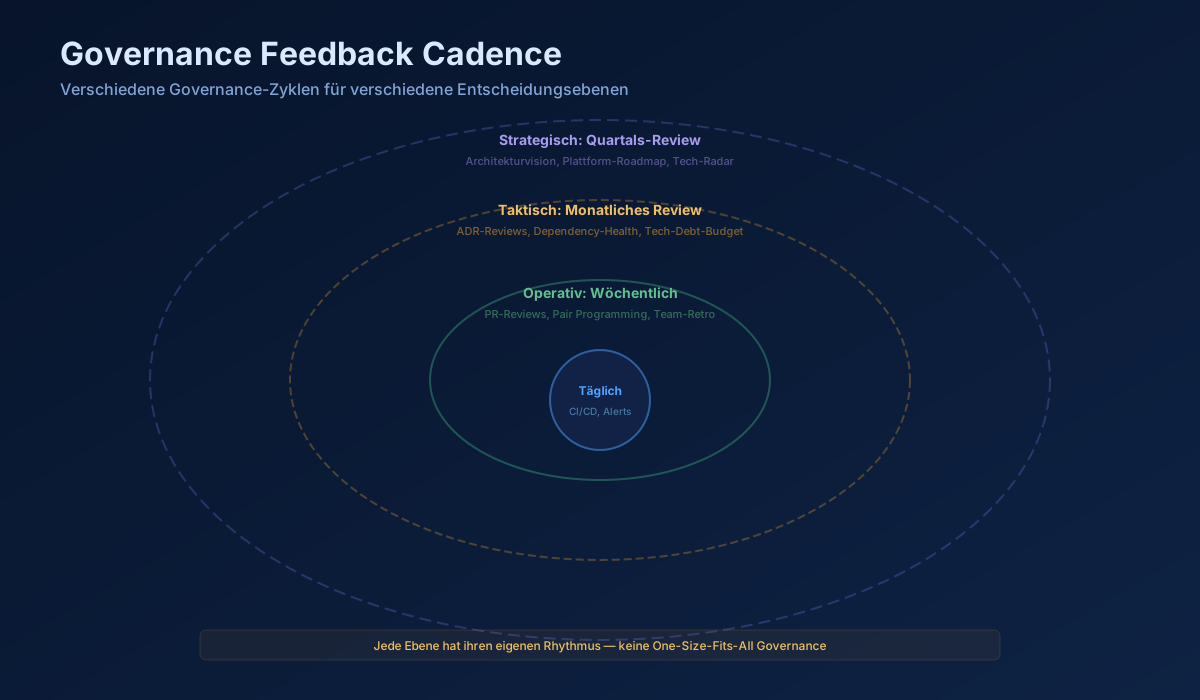
When This Intervention Becomes Effective
This intervention is deeply aligned with Stafford Beer's Viable System Model. Management cadence must be much slower than the cadence of operational execution or the system will oscillate. Just as you turn a steering wheel more slowly than the wheels are spinning, a CTO should not react at the same speed as a sprint review.
What Distinguishes This Intervention from Other Levers
Delay-Aware Governance is the philosophical ability to tolerate worsening before better. Governance Feedback Cadence is more concrete: it changes calendar invites, removes unnecessary status rituals, and mathematically slows down inappropriate oversight.
How to Introduce the Intervention Cleanly
Match cadence to the maturity of the work. A highly uncertain GenAI research initiative may need daily learning check-ins. A stable payment backend should be governed through calm quarterly review. Situational governance matters more than one universal rhythm.
First Implementation Steps
Make the heartbeat visible across the company. Whether you call it rhythm of business or enterprise heartbeat, every intern and architect should know which day is for which class of decision. A well-designed organizational pulse moves information quietly, predictably, and without stress.
How to Recognize Impact
Are C-level reviews of project KPIs deliberately choreographed to filter out daily noise and evaluate only the rolling four-week trend?
Sources
Gene Kim et al. — Accelerate, Ch. 5: Architecture & Governance (IT Revolution, 2018)
Gregor Hohpe — The Software Architect Elevator (O'Reilly, 2020)
Authors & Books
Go to referencesRelevant references for Governance Feedback Cadence.
Leverage indicator
Leverage level 8 · Balancing feedback loops
Category: Structure
Go to interventions wheelContinue reading
Explore related topics from Interventions
Boundary Design
The physical and logical redrawing of boundaries such as APIs and team structures to drastically reduce friction and handoffs across the system.
Boundary Reframing
The strategic act of showing management that it shares responsibility for the current architecture problem because it defined the observation space too narrowly.