Goal Reframing
The riskiest and most powerful intervention: rewriting what the organization and the system actually mean when they say "success.
Why it matters
Interventions matter when they do more than ease symptoms and instead shift system behavior sustainably.
Next step
Link the intervention to tools and decision rituals so it remains effective in day-to-day work.

System Problem
A system aligns consistently with its goal, no matter how unsuitable or destructive that goal may be. The classic architecture problem is proxy-metric bias. A CIO sets the target of 100 deployments a day, and the team responds cleverly by deploying empty text-file changes all day long instead of improving the actual pipeline or product quality. If you optimize for the wrong game, the architecture dies. A brilliant microservice architecture built for the wrong goal only accelerates decline.
Intervention
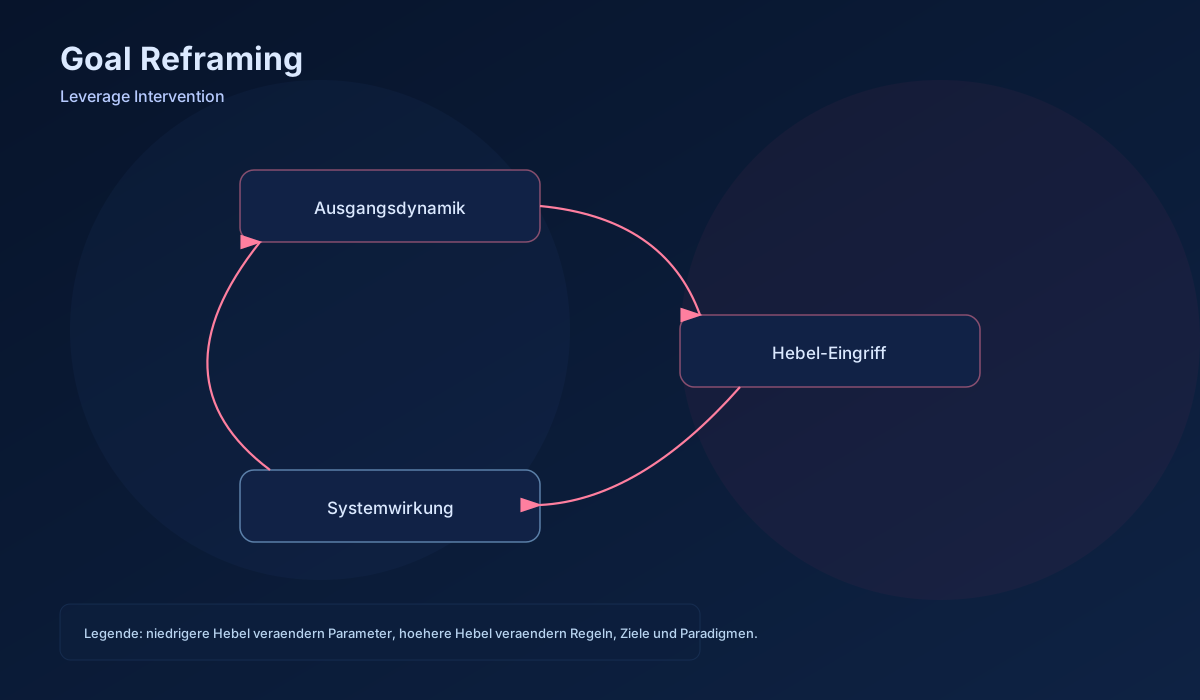
"Goal Reframing" corresponds to leverage point number three in Donella Meadows's hierarchy: the goal of the system. It changes neither code nor servers nor staffing. It changes the sentence above the team's door. Instead of "Finish 100 Jira story points per sprint," the reframed goal might become "Maximize checkout revenue while reducing support tickets." The intervention shifts the target that all downstream behaviors are trying to satisfy.
Expected Impact
The playing field changes overnight. Once teams are measured against business outcomes rather than story-point output, feature theater starts to lose its appeal. Engineers begin running experiments on latency and user experience because they can finally see how these factors affect the real business result. Goal reframing can turn coders into co-owners of the system.
Side Effects and Risks
The risk is disorientation. True systemic goals such as resilience, customer trust, or adaptability are harder to measure than ticket quotas. Teams that have lived for years inside crude throughput metrics may freeze when the old numbers disappear. It often takes weeks of reorientation before the new evaluative logic starts to feel real.
Diagram
When This Intervention Becomes Effective
Meadows warns that systems often have two goals: the loud one on the wall and the quiet physical one encoded in incentives and algorithms. Changing the mission statement is meaningless if bonuses still reward feature punctuality. Goal reframing becomes effective only when the quiet goal changes too.
What Distinguishes This Intervention from Other Levers
Explicit Tradeoff Policies accept the current goal and clarify the losses attached to it. Goal Reframing wipes the board clean and starts one level higher by questioning the purpose itself, closer to the terrain of root definition work.
How to Introduce the Intervention Cleanly
Be careful with metrics. Metrics are indicators on the way to a goal, not the goal itself. Replace input-heavy objectives such as "write 5,000 lines of code" with outcome targets such as "increase conversion by 2%." Goodhart's Law should be treated as a warning label for every architecture KPI.
First Implementation Steps
Goal reframing must have the authority to damage existing roadmap commitments. If the IT department adopts "Security First" as its new top-level goal, it must be fully legitimate to wipe the next quarter's feature roadmap and redirect the organization toward hardening work. If the roadmap keeps winning over the stated goal, the reframing was fake.
How to Recognize Impact
Can five random developers in an elevator explain how the microservice they work on connects, both operationally and psychologically, to the newly reframed strategic business goal?
Sources
Donella Meadows — Leverage Points: Places to Intervene in a System (1999)
Authors & Books
Go to referencesRelevant references for Goal Reframing.
Leverage indicator
Leverage level 3 · Goals of the system
Category: Goals
Go to interventions wheelContinue reading
Explore related topics from Interventions
Boundary Design
The physical and logical redrawing of boundaries such as APIs and team structures to drastically reduce friction and handoffs across the system.
Boundary Reframing
The strategic act of showing management that it shares responsibility for the current architecture problem because it defined the observation space too narrowly.