Delay-Aware Governance
Strategic non-intervention in which leaders force themselves to tolerate the delay between architectural change and visible metric improvements instead of panicking and correcting too early.
Why it matters
Interventions matter when they do more than ease symptoms and instead shift system behavior sustainably.
Next step
Link the intervention to tools and decision rituals so it remains effective in day-to-day work.

System Problem
A classic balancing-loop-with-delay disaster: the CTO board decides that delivery speed is too low and launches a DevOps transformation. Three months later code quality looks worse and the teams appear slower because everyone is climbing the learning curve of new tools. Management panics. Because the system has not delivered results immediately, they cancel the initiative and revert to the old waterfall mode. The problem was not the intervention itself, but their inability to tolerate delay.
Intervention
"Delay-Aware Governance" systematically decouples control dashboards from short-term reaction cycles. Leaders in architecture intentionally take their hands off the steering wheel. If a major change such as a migration from Angular to React has an unavoidable nine-month learning and transition curve, management forbids itself from micromanaging months one through eight, even if the metrics look ugly. Every panic correction increases the risk of overshoot and oscillation.
Expected Impact
The constant strategic zigzag ends. Teams get a real chance to pay down deep architectural debt because they know they have management air cover while they move through the dark valley of change. With slower and more deliberate corrections from leadership, the organization can settle into a new and higher performance level.
Side Effects and Risks
The greatest danger is complacency. "This is normal, the system just needs time" can become the perfect excuse for work that is already failing. The craft of this intervention lies in distinguishing predicted delay from genuine system decay. If you ask people to wait, you need sharp leading indicators that show the intervention is still moving in the right direction. Without those indicators, waiting is merely negligence.
Diagram
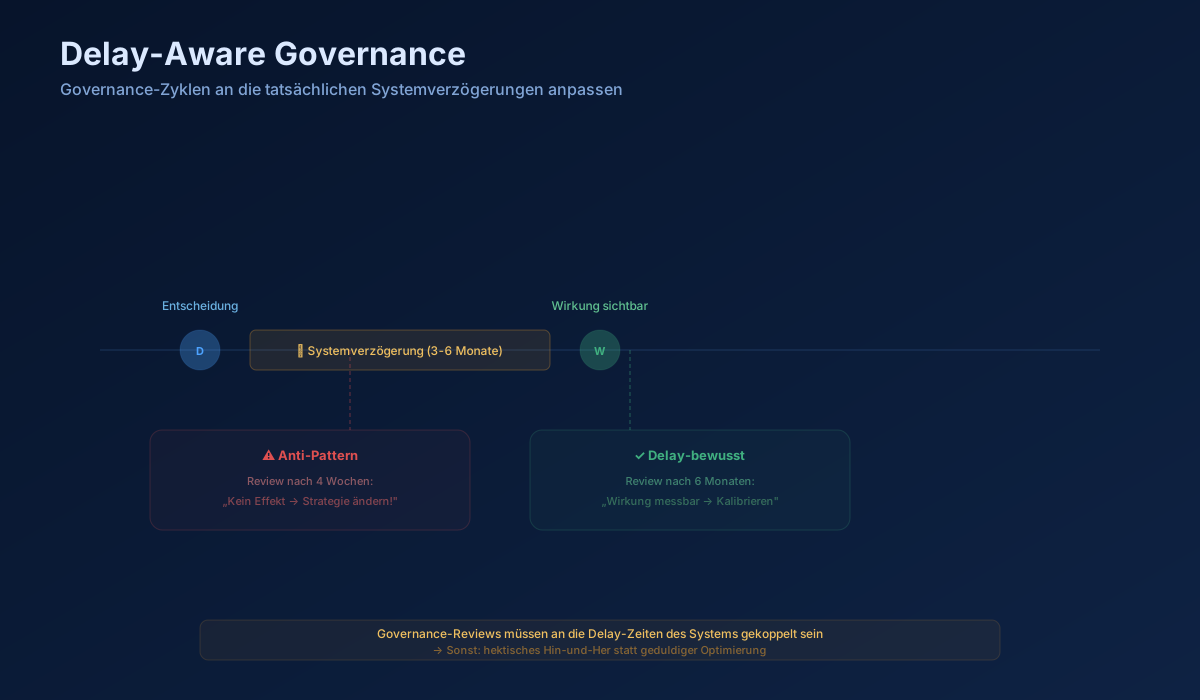
When This Intervention Becomes Effective
John Sterman compares delays to showering in an unfamiliar hotel. The water is cold, so you turn the handle toward hot. Nothing happens for a moment. In panic you crank it all the way, and five seconds later you get scalded. Immature IT governance behaves like that in every transformation. Mature delay-aware governance understands the hidden pump in the basement and is willing to stand still for a few uncomfortable seconds.
What Distinguishes This Intervention from Other Levers
Stock and Flow Mapping helps you calculate the likely delay mathematically ahead of time. Delay-Aware Governance is the human maturity test of actually tolerating that calculated delay without intervening prematurely.
How to Introduce the Intervention Cleanly
Never present major architectural changes as instant wins. For large refactorings, always show the J-curve. Make it explicit that metrics may fall for several sprints. Ask stakeholders for a real commitment to the dip. If management is unwilling to fund that delay, the migration should not start.
First Implementation Steps
Lengthen the review cycle to match the transformation. If you are rebuilding the organization around asynchronous event-driven services, do not judge success in a two-week sprint review. That cadence is too fast for the architectural delay involved. Move governance for that specific effort to a monthly or quarterly review.
How to Recognize Impact
When a major restructuring causes the expected 20% drop in velocity during the first month, do we trigger panic meetings, or do we trust the leading indicators we agreed on in advance?
Sources
Donella Meadows — Thinking in Systems, Ch. 2: Delays
John Sterman — Business Dynamics, Ch. 4: Delays (McGraw-Hill, 2000)
Authors & Books
Go to referencesRelevant references for Delay-Aware Governance.
Leverage indicator
Leverage level 9 · Delays
Category: Structure
Go to interventions wheelContinue reading
Explore related topics from Interventions
Boundary Design
The physical and logical redrawing of boundaries such as APIs and team structures to drastically reduce friction and handoffs across the system.
Boundary Reframing
The strategic act of showing management that it shares responsibility for the current architecture problem because it defined the observation space too narrowly.