Decision Rights Clarification
The drastic removal of ambiguity about who in architecture may recommend, veto, or ultimately press the buy button.
Why it matters
Interventions matter when they do more than ease symptoms and instead shift system behavior sustainably.
Next step
Link the intervention to tools and decision rituals so it remains effective in day-to-day work.

System Problem
In flat and supposedly agile hierarchies, the illusion of perfect consensus often takes over. Fifteen developers sit in a two-hour call debating whether the new project should use React or Vue. Nobody wants to look authoritarian, so nobody decides. In the end the team lands on a pseudo-democratic compromise, such as using both via micro-frontends, and the architecture suffers. When ownership is unclear, the swamp of collective irresponsibility takes over.
Intervention
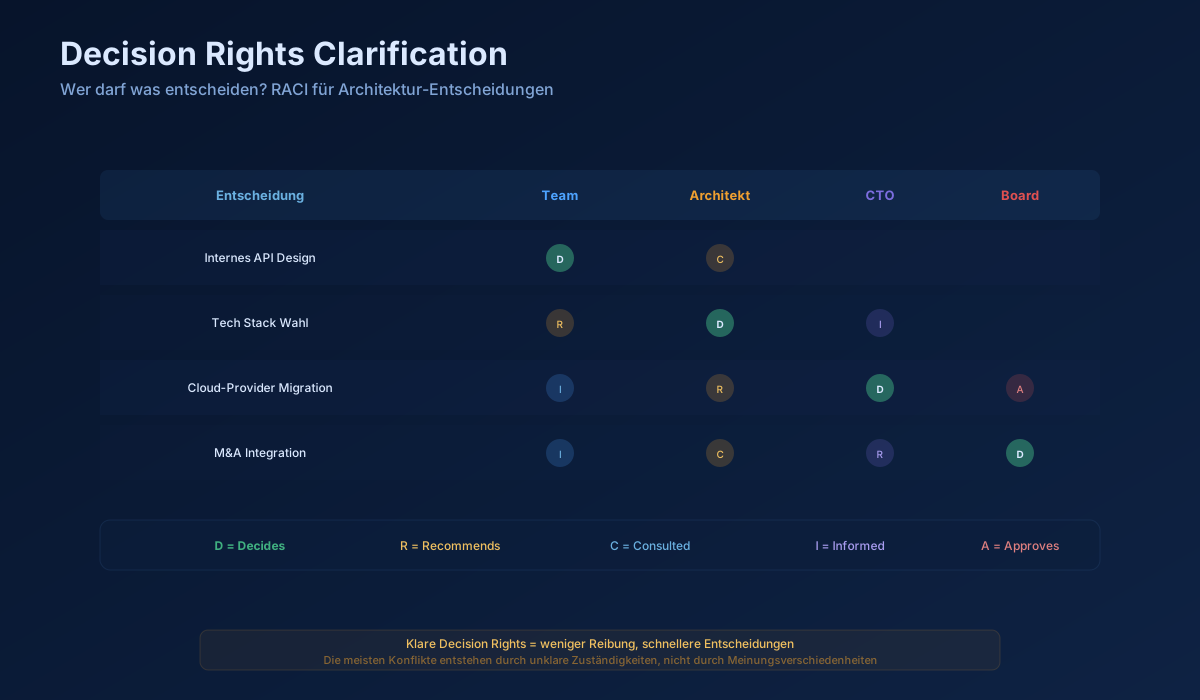
"Decision Rights Clarification" clears away this democratic illusion in software architecture. Not every decision should be subject to endless equal voting. The intervention defines, through a RACI matrix or comparable governance artifacts, exactly one accountable owner for every strategic technical decision. It makes explicit who can claim code ownership, who can issue a veto, and who may offer input without blocking the outcome.
Expected Impact
Decision bottlenecks that delay projects for months can dissolve almost overnight. The familiar sentence "We should talk about this again next time" starts disappearing from meeting calendars. Developers also feel safer because the rules of the game are visible. Conflicts between leaders no longer drag on in the codebase through API workarounds but are escalated quickly to the person who actually has the final decision right.
Side Effects and Risks
If decision rights become too centralized in an ivory-tower architecture board, team autonomy dies. The predictable reaction is shadow IT, with teams building around official processes because waiting for permission hurts too much. The key is decentralized clarity: give teams full decision rights over their local modules while using architecture boundaries and diagrams to prevent local autonomy from turning into global damage.
Diagram
When This Intervention Becomes Effective
Gregor Hohpe teaches that an architect is not a ruler over tools, but a decision engineer. One efficient way to exercise decision rights is through architecture decision records. An ADR does not merely document what was decided. It also records who decided and why, in that specific context, which protects the decision-maker from unfair blame years later.
What Distinguishes This Intervention from Other Levers
Stakeholder Mapping is the diagnostic step that reveals who has influence and interest. Decision Rights Clarification turns that diagnosis into an explicit operating model that assigns or removes formal power.
How to Introduce the Intervention Cleanly
Remove the word "we" from management templates. "We decided" is one of the most dangerous phrases in IT. Who exactly is we? In every architecture pivot, force the moderator to ask for names. If this migration damages a million euros and our database setup twelve months from now, who in this room owns that outcome? The person who answers has the decision right. Everyone else is advisory.
First Implementation Steps
Use established tools such as a RACI matrix, but adapt them to software reality. The person responsible may be the coder in the IDE, while the accountable person is the tech lead who merges the pull request. Deliberately putting some stakeholders in the informed category protects the architecture from harmful veto players who have nothing to do with the code itself.
How to Recognize Impact
Do we have clearly named code owners for our three most critical infrastructure zones in the repository, and do those rights remain valid even when spontaneous C-level demands appear?
Sources
Gregor Hohpe — The Software Architect Elevator, Ch. 12: Decision Making (O'Reilly, 2020)
Authors & Books
Go to referencesRelevant references for Decision Rights Clarification.
Leverage indicator
Leverage level 5 · Rules of the system
Category: Rules
Go to interventions wheelContinue reading
Explore related topics from Interventions
Boundary Design
The physical and logical redrawing of boundaries such as APIs and team structures to drastically reduce friction and handoffs across the system.
Boundary Reframing
The strategic act of showing management that it shares responsibility for the current architecture problem because it defined the observation space too narrowly.