Top-Down vs. Bottom-Up Architecture
Navigating between hard centralized top-down architecture guidelines and the local bottom-up evolution of teams.
Why it matters
Use this concept to explain observable behavior structurally rather than merely naming it.
Next step
Next, check which archetype or diagnostic method makes the pattern visible in the concrete system.

Definition
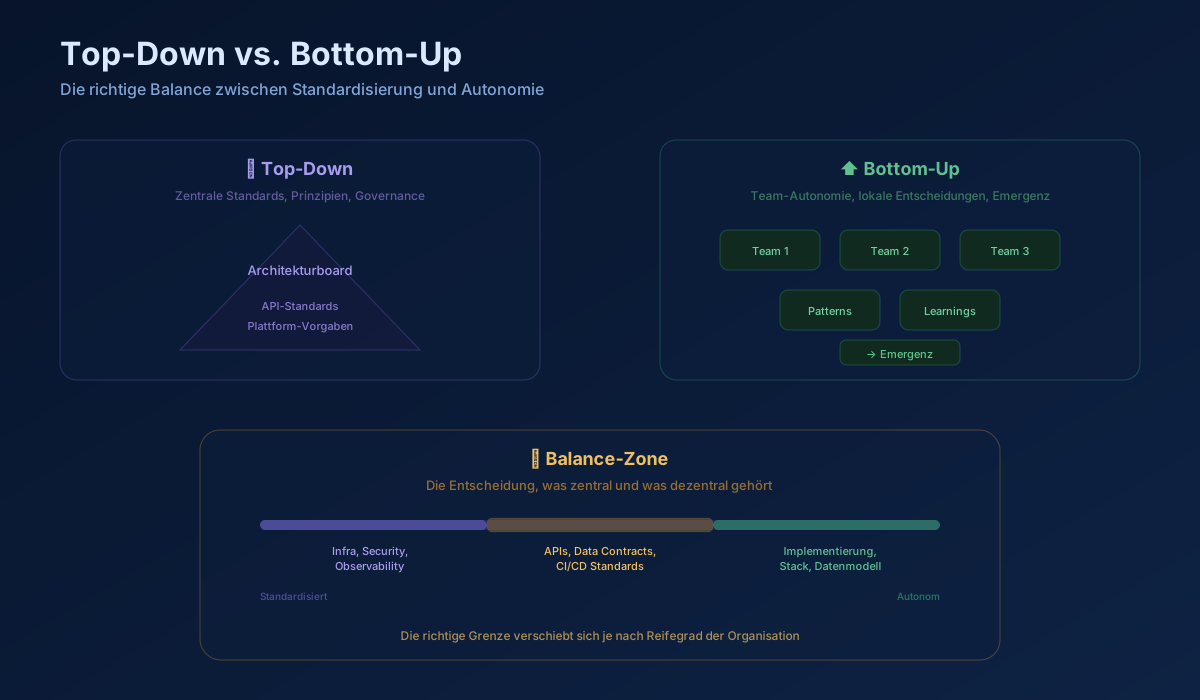
The debate between top-down and bottom-up shapes every larger technology organization. Top-down architecture, often associated with the ivory tower, grows out of the desire for standardization, cost efficiency, and clear alignment. A central body defines structures that teams must follow. Bottom-up architecture, often called evolutionary architecture, delegates power. Each team chooses the best tool for its own job, and the overall system evolves organically through constant adaptation to operational reality.
System Mechanism
Taken alone, both extremes are unstable because they damage balancing feedback loops. Pure top-down control creates significant planning delays and eventually policy resistance. By the time an architecture board mandates a technology, it may already be outdated. Pure bottom-up design creates silos and sub-optimization. Ten teams optimizing only their own code decisions can produce a Frankenstein system that cannot be observed or operated smoothly as a whole.
Architecture Example
The classic ivory tower architect draws UML diagrams and forces the same Kafka version and central data model on every team. Teams comply, but deployment times rise sharply because the model is oversized for many use cases and lacks requisite variety. On the other side, the startup with no guidance celebrates its velocity. Team A builds in Go, Team B in Rust, Team C in Node.js. A year later, the company struggles because nobody can take over the code of a sick engineer. Entropy and weak resilience catch up.
Organizational Example
OKRs were invented partly to harmonize both worlds. Management defines the strategic north star in simplified form, such as doubling application performance. Teams are not told how to achieve it. Instead, they derive their own key results from their local system reality, such as implementing a GraphQL cache. The objective is top-down, while the path remains bottom-up.
Diagnostic Questions
1.Do we have a command-and-control body that makes decisions without writing code or feeling operational pain itself?
2.Are we running a Wild West bottom-up model where each new service reopens basic debates about CI/CD and programming languages and wastes cognitive capacity?
3.Where are necessary standards sinking into local resistance from teams that reject anything central on reflex?
Diagram
Why This Concept Helps in Architecture
Gregor Hohpe describes architects as translators who must ride the elevator continuously between the penthouse of strategy and the machine room of code. If architects stay at the top, they design castles in the air. If they stay only with developers, they may build beautiful technical solutions to the wrong strategic problem. Mastery lies in balancing the pendulum continuously.
How to Distinguish It from Similar Topics
This concept is tightly linked to requisite variety and Conway's Law. Centralization always aims to reduce variety, while bottom-up emergence tolerates and learns from variety. Good architecture draws hard boundaries where stability is essential, such as APIs, security, and observability, and leaves room for emergence in the spaces between.
How to Use the Concept in Practice
Introduce macro-level architecture standards through paved roads. Offer a centrally maintained framework that gives teams CI/CD, metrics, and deployment out of the box. Then tell them that they may leave the paved road for an exotic database if they want, but they will own the 24/7 operations, monitoring, and pager burden themselves. Most teams will choose the top-down standard voluntarily because it is the easiest path.
First Implementation Steps
Use formats such as RFCs written by development teams to capture bottom-up ideas and translate them into global top-down standards. That way you keep the power of the community while still creating shared direction.
How You Recognize Impact
Before the last architecture rule became company policy, was it stress-tested and validated for feasibility by at least two engineering squads?
Sources
Gregor Hohpe — The Software Architect Elevator (O'Reilly, 2020)
Martin Fowler — Who Needs an Architect? (IEEE Software, 2003)
Authors & Books
Go to referencesRelevant references for Top-Down vs. Bottom-Up Architecture.
Concept Visual
Top-Down Bottom-Up: Strategic and local control meet at boundary points.