Circular Causality
Circular causality describes feedback effects rather than linear cause and effect.
Why it matters
Use this concept to explain observable behavior structurally rather than merely naming it.
Next step
Next, check which archetype or diagnostic method makes the pattern visible in the concrete system.

Definition
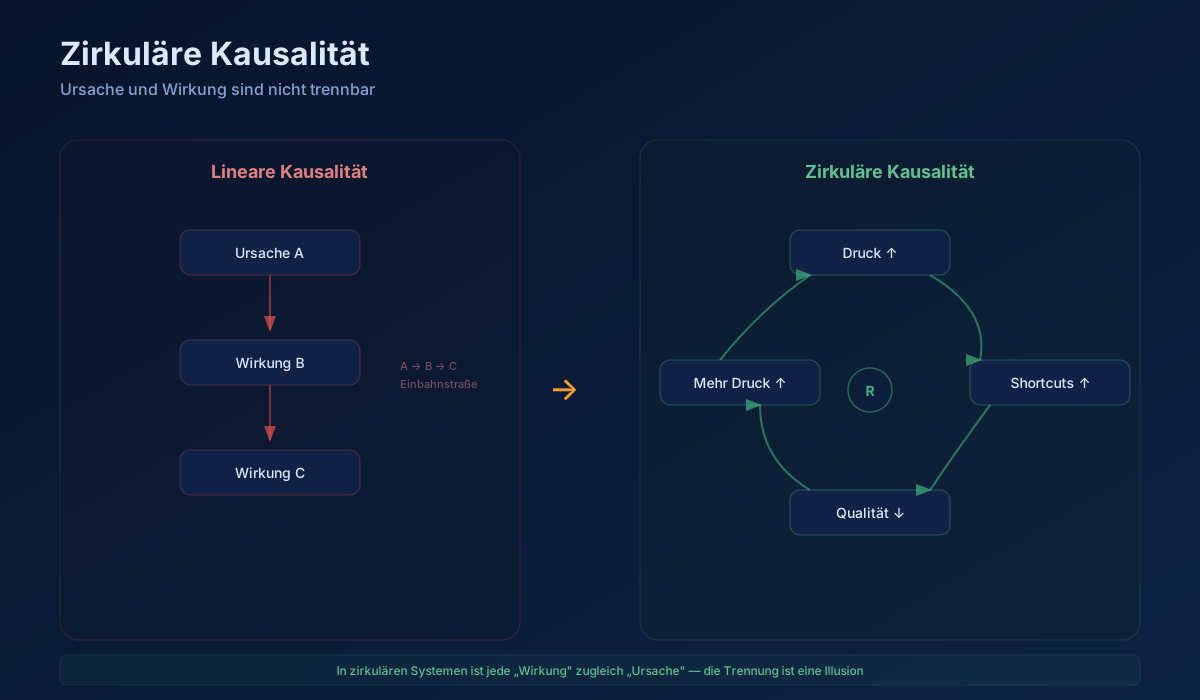
Circular causality breaks with the human habit of thinking in strict linear cause-and-effect chains where A leads to B. In systems thinking, we recognize that effects always fire back on their causes: A influences B, and B in turn influences A. This concept is fundamental for understanding why simple solutions in complex environments often produce the opposite of what was intended.
System Mechanism
The core mechanism is the feedback loop. When we intervene in a system, we change its state. That new state triggers reactions from other actors or technical components, and those reactions affect our original intervention. A linear solution approach often creates escalating problems because it ignores the circular return effect.
Architecture Example
A team introduces caching to reduce database load. The application becomes extremely fast, which encourages new client features that generate heavy traffic. That traffic eventually overloads other unprotected microservices responsible for cache invalidation. The original solution makes the system less stable over time because the full circle of consequences was never modeled.
Organizational Example
Management notices that projects are too slow and introduces stricter reporting and approval processes to gain more control. Filling out reports consumes a large share of developer time, so projects slow down even more. Management sees the additional delay, concludes that control is still insufficient, and adds even more status meetings. That is a classic vicious circle driven by circular causality.
Diagnostic Questions
1.Are we currently looking in only one direction, where A causes B, or are we actively searching for the boomerang effect?
2.How does the solution to our current problem contribute to the creation of new problems?
3.Which hidden loops keep feeding the core problem again and again?
Diagram
Why This Concept Helps in Architecture
To make circular causality tangible, drawing causal loop diagrams is extremely helpful. As soon as teams stop blaming failures on isolated causes such as "Team X messed up" and instead map the web of dependencies, the circular nature of the problem becomes visible. Energy shifts away from blame and toward redesigning the system structure.
How to Distinguish It from Similar Topics
Circular causality describes the general way events unfold in connected systems. It is the theoretical basis for feedback loops and system archetypes such as Escalation or Fixes that Fail. Its focus is the principle of mutual influence itself.
How to Use the Concept in Practice
When you face a stubborn architecture or organizational problem, draw a circle instead of a line. Ask what happens after the solution is implemented and how the system reacts to the new state. Once you close the loop, the real leverage points for sustainable improvement become visible.
First Implementation Steps
Make it a team habit not to search for a single linear root cause after every incident. Instead, surface the interacting causes that reproduce the system behavior.
How You Recognize Impact
Before closing a measure, check whether you considered the loop all the way through. Did you anticipate side effects that might feed back into the original problem?
Sources
Donella Meadows — Thinking in Systems, Kap. 1: Feedback Loops
Authors & Books
Go to referencesRelevant references for Circular Causality.
Concept Visual
Circular Causality: Cause and effect influence each other.
Continue reading
Explore related topics from Concepts