Adaptation
Adaptation describes how systems learn from change and adjust their behavior.
Why it matters
Use this concept to explain observable behavior structurally rather than merely naming it.
Next step
Next, check which archetype or diagnostic method makes the pattern visible in the concrete system.

Definition
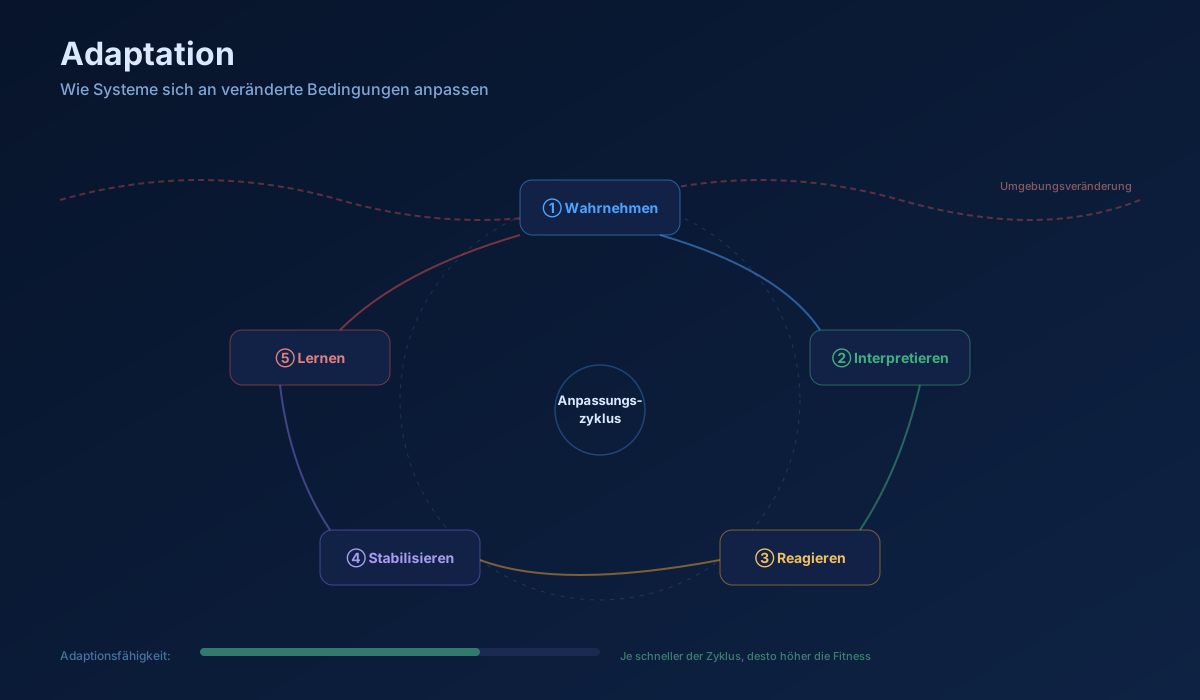
Adaptation is a system's ability to adjust its behavior systematically based on experience and changing environmental conditions. In systems thinking, adaptation is not a random event but a structural learning process. An adaptive system registers external shocks or internal errors, processes that feedback, and changes its own rules so it can respond better next time.
System Mechanism
At the core of adaptation is structural feedback: a system takes an action, measures the result, and adjusts the next attempt. When architectures or organizations are built too rigidly, they block these feedback loops. Real adaptation therefore requires the deliberate design of sensors, such as metrics and reviews, and actuators, such as room to change code or processes.
Architecture Example
A microservice ecosystem is not designed to scale perfectly from day one. Instead, the architecture team implements circuit breakers and auto-scaling. When load spikes occur, the system responds automatically, learns from the metrics, and adjusts resource allocation. The architecture is not static. It is designed to be adaptive.
Organizational Example
A feature team notices over several sprints that dependencies on another department are blocking delivery. Instead of just working harder as an operational response, the team changes its way of working. It revises interface contracts and establishes a new coordination ritual. The organization evolves adaptively instead of merely treating symptoms.
Diagnostic Questions
1.How quickly does our architecture or team detect changing conditions?
2.Are there structural barriers that block fast adjustment?
3.Do failures and incidents systematically lead to new rules?
Diagram
Why This Concept Helps in Architecture
Adaptation should not be confused with pure responsiveness or agility. Responsiveness means fixing disruptions quickly. Adaptation means changing the underlying structure so the same disruption is handled better in the future. For architects, that means designing systems that allow safe experiments and learn from them.
How to Distinguish It from Similar Topics
Adaptation describes a system's learning and change process across time. It differs from resilience, which primarily describes the ability to return to normal after shocks. Adaptation aims for a better new state.
How to Use the Concept in Practice
To make systems adaptive, feedback cycles such as post-mortems, DORA metrics, and architecture reviews must be kept as short as possible. Give teams the autonomy to remove their own bottlenecks, and ensure technical interfaces such as APIs stay loosely coupled so local adjustments do not cause global failures.
First Implementation Steps
Do not confuse firefighting with real adaptation. Resolving emergencies is not structural adjustment.
Establish formats such as Architecture Decision Records (ADRs) to document the learning process and the reasons behind deliberate architecture changes.
How You Recognize Impact
Before closing an issue, ask whether the actual cause was removed or only a symptom was relieved. Is the system now more robust against similar incidents?
Sources
Donella Meadows — Thinking in Systems: A Primer (Chelsea Green, 2008)
Wikipedia: Complex Adaptive Systems
John H. Holland — Hidden Order: How Adaptation Builds Complexity (Basic Books, 1995)
Authors & Books
Go to referencesRelevant references for Adaptation.
Concept Visual
Adaptation: Balancing loop for stabilization in changing environmental conditions.
Continue reading
Explore related topics from Concepts