Systems Thinking in the Architecture Context
Systems thinking analyzes the interdependencies, feedback loops, and delays among individual parts instead of trying to repair them in isolation.
Why it matters
Use this concept to explain observable behavior structurally rather than merely naming it.
Next step
Next, check which archetype or diagnostic method makes the pattern visible in the concrete system.

Definition
Systems thinking is the foundational meta-framework for deep problem analysis. Instead of reacting reductionistically to a failure in a complex architecture by immediately asking who or what is directly to blame, the systems thinker zooms out. The paradigm says that structure drives behavior. Patterns and incidents that keep appearing over time are rarely the fault of unsuitable actors. They are usually the logical result of poorly interwoven feedback loops, delays, and invisible system boundaries.
System Mechanism
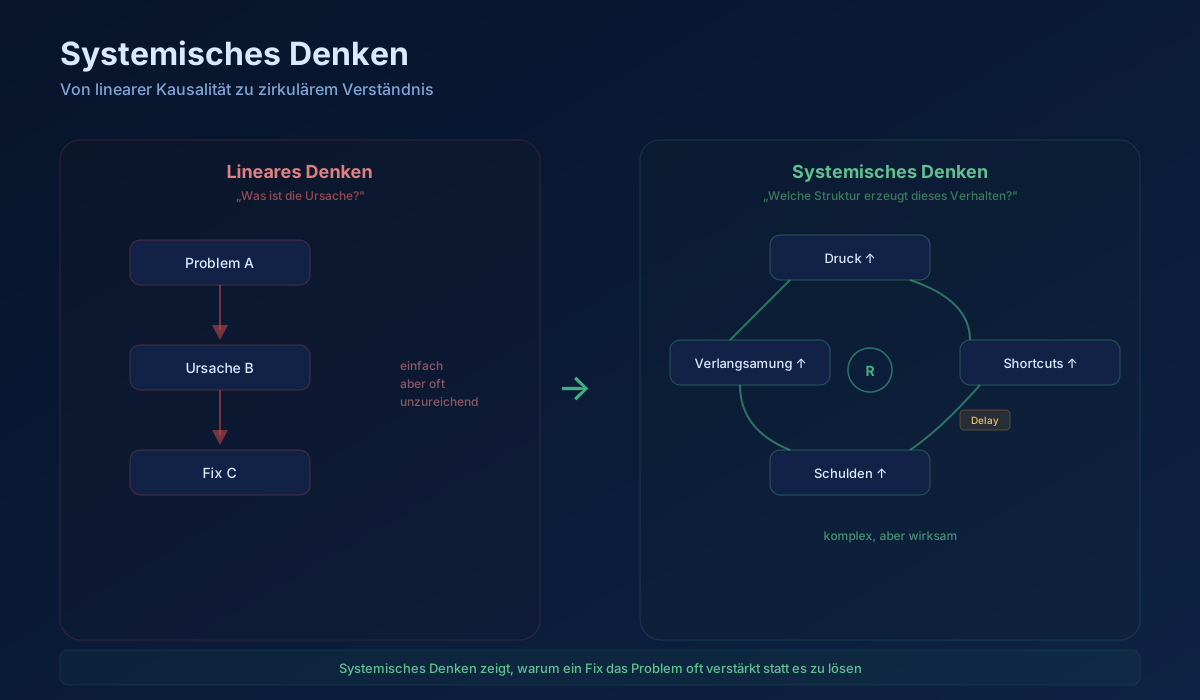
The key mental shift is from linear to circular thinking. A classic manager asks, "Why is the application slow? Ah, the database. We need a bigger database." The systems thinker asks, "Why is the application requesting data so aggressively in the first place? Ah, the cache miss rate triggers auto-scaling, which spins up more pods that create even more useless load." This perspective reveals the circular feedback loop that produces the symptom of a slow database as a logical outcome.
Architecture Example
A microservice regularly throws out-of-memory exceptions and fails on the event level. A superficial, reductionist fix raises the container's RAM limit. The next month, the service fails again. A systemic view looks at the pattern over time and finds a hidden balancing loop with too much delay in message queue processing. Increasing the RAM merely gave the queue more physical space, but it did not remove the structural flaw in how messages were drained.
Organizational Example
A company suffers from poor deployment quality in production. The linear response is to punish developers who cause production bugs. The system resists through policy resistance: developers become so afraid that they barely release at all. Release cycles grow from hours to weeks, the changes become large, and deployments produce even worse failures. Systems thinking calls for smaller isolated deployments, less friction, and faster discovery instead of fear.
Diagnostic Questions
1.Are we still investigating architecture failures only at the level of isolated events instead of treating them as symptoms of a deeper structure?
2.During the last major incident, where did we settle too quickly for the first plausible cause and stop looking for structural explanations?
3.Do we already see the elephant in the room, namely the dysfunctional feedback loops in our delivery process, but refuse to challenge them?
Diagram
Why This Concept Helps in Architecture
Systems thinking in architecture consistently distinguishes between three levels:
1.Events (What happened?) Reactive action and firefighting.
2.Patterns (What changed gradually?) Adaptive action and trend recognition.
3.Structure (Why did those patterns emerge?) Generative action and system redesign.
If you intervene at the structural level, for example by reducing communication paths, empowering teams, or improving continuous delivery pipelines, you can eliminate hundreds of future incidents in one move. That is effective leverage.
How to Distinguish It from Similar Topics
Systems thinking is the umbrella under which all the other concepts in this handbook, such as mental models, Conway's Law, or circular causality, are gathered. It forms the intellectual toolkit behind practical instruments like archetypes and diagnostics.
How to Use the Concept in Practice
When tech management gets nervous and demands solutions such as "Buy us this new API gateway," force the conversation back to the iceberg model. Sketch out the visible event at the tip of the iceberg, the historical pattern below the waterline, and the underlying system structure at the bottom that generates the pattern. Only once the deep layer is evidenced should you choose an architectural intervention that deliberately changes it.
First Implementation Steps
Consistently use the "Five Whys" technique or causal loop mapping after incidents instead of accepting post-mortem shortcuts such as "human error by colleague Mayer." In systems work, human error is never the true cause. It is always a symptom of poor design.
How You Recognize Impact
In the last architecture review, was the problem visualized with all of its dependencies before a decision was made about the next software package?
Sources
Peter Senge — The Fifth Discipline (Doubleday, 1990)
Donella Meadows — Thinking in Systems: A Primer (Chelsea Green, 2008)
Authors & Books
Go to referencesRelevant references for Systems Thinking in the Architecture Context.
Concept Visual
System Thinking: Decisions, effects and signals form a learning cycle.