Sociotechnical Architecture
Software architecture can never be viewed independently from the people and teams who create and operate it.
Why it matters
Use this concept to explain observable behavior structurally rather than merely naming it.
Next step
Next, check which archetype or diagnostic method makes the pattern visible in the concrete system.

Definition
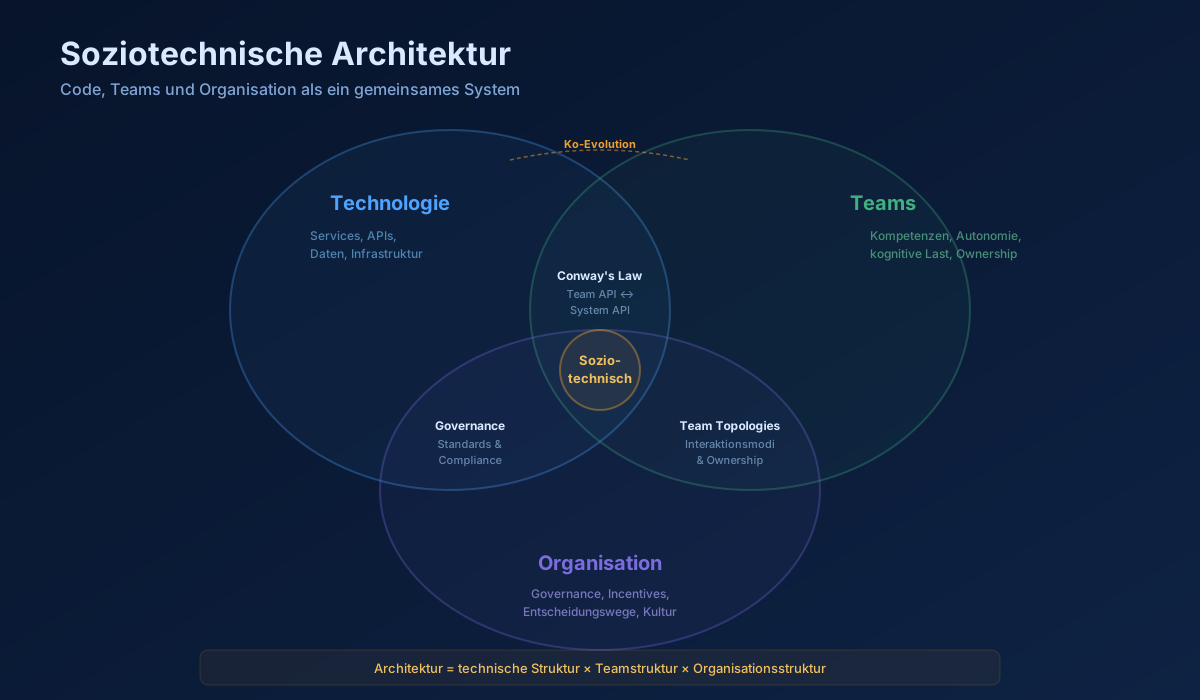
Sociotechnical architecture is the discipline that recognizes IT systems as more than hardware and code pipelines. They also consist of interacting people, team structures, and organizational culture. Both sides co-evolve and influence each other inseparably. An elegant technical cloud architecture is likely to fail if it is operated in a climate of fear where teams are blamed for failures instead of being allowed to learn autonomously.
System Mechanism
When a complex technical deployment model meets a rigid handbook-driven way of working, the two worlds create constant friction. That friction generates transaction cost, frustration, and shadow IT. Optimization on only one axis is impossible. Every new technical API boundary is also a new team handoff boundary under Conway's Law.
Architecture Example
A bank migrates to asynchronous event-driven architecture with Kafka in pursuit of agility. But business review processes and security audits remain centralized in a large change advisory board. Even though services communicate in milliseconds, each release still takes six weeks because of monthly executive approvals. The technical design collapses under the inefficiency of the social structure.
Organizational Example
A platform engineering initiative launches and the platform team builds an excellent internal Kubernetes offering. But they fail to account for the mindset of feature developers, who are accustomed to serverless functions and dislike command-line complexity. Developers boycott the platform. The technical system works, yet the sociotechnical system delivers almost no value because adoption never happens.
Diagnostic Questions
1.During the last architecture review, did we look only at UML diagrams and code metrics, or did we also examine the cognitive load on the teams maintaining the system?
2.Where does our organizational structure, such as hierarchy or bonus systems, create technical code dependencies that should not exist?
3.Which architects design systems proudly on paper while refusing to engage with team building, psychological safety, or flow metrics?
Diagram
Why This Concept Helps in Architecture
The core task of sociotechnical architecture is reducing cognitive load. People have a hard limit on how much business logic, tooling, and dependency complexity they can understand at once. System boundaries such as microservices and bounded contexts must be sliced so they fit into the head of one agile team without overloading it. If the code is more complex than the team can handle, entropy and technical debt win.
How to Distinguish It from Similar Topics
Sociotechnical architecture is the applied umbrella under which Conway's Law sits. Conway's Law describes the mechanism by which communication shapes code. Sociotechnical architecture is the active design practice of balancing team topology and code structure together.
How to Use the Concept in Practice
Look at every architecture decision first through the team lens. Will this technology make teams more autonomous, or will they now need approvals from other departments for every small change? Do our internal platforms offer true self-service paved roads, or are we simply throwing raw infrastructure over the wall? Architecture must center teams, not just servers.
First Implementation Steps
Combine techniques such as Domain-Driven Design on the technical side with Team Topologies on the social side so bounded contexts align with genuinely self-directed stream-aligned teams.
How You Recognize Impact
Besides mean time to recovery, do we also track developer satisfaction as a core proxy for whether the architecture really works?
Sources
Matthew Skelton & Manuel Pais — Team Topologies (IT Revolution, 2019)
Authors & Books
Go to referencesRelevant references for Sociotechnical Architecture.
Concept Visual
Sociotechnical Architecture: Technology, team and organizational boundaries must be thought of together.