Purpose and Function
Every system has an objective purpose or function that can be read from its actual behavior, not from its official slogan.
Why it matters
Use this concept to explain observable behavior structurally rather than merely naming it.
Next step
Next, check which archetype or diagnostic method makes the pattern visible in the concrete system.

Definition
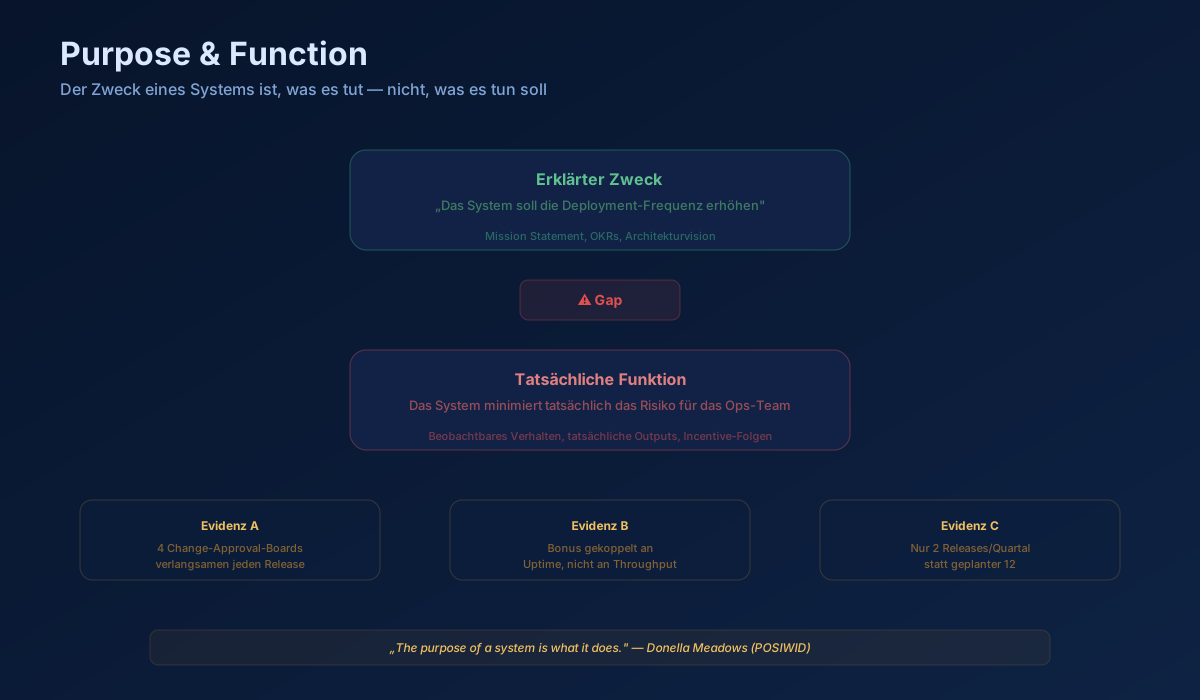
Purpose in human systems and function in mechanical systems describe the real "why" of a system. One of the key dogmas of systems thinking is that you do not discover a system's purpose by reading its design document or the mission statement on the wall. You discover it by observing how the system actually behaves. What a system consistently produces is its purpose, often summarized as POSIWID: the purpose of a system is what it does.
System Mechanism
System goals shape behavior significantly. If the structural logic of incentives, budgets, and promotions runs out of sync with the official vision, structure always wins. A company can write "innovation" on every wall and still reward only error avoidance. Over time, balancing loops force the organization into risk aversion.
Architecture Example
An architecture team announces, "We are building the most robust and best-tested microservice landscape." In reality, developers are praised and promoted only for shipping new endpoints quickly, while refactoring receives no recognition. The observable behavior of the system is the steady maximization of fast and fragile code. The true purpose of the architecture process is feature velocity, regardless of what the Confluence page claims.
Organizational Example
Consider a classic quality assurance department. Its nominal purpose is to ensure defect-free software. But if you watch how it actually operates, you may see endless specifications, long cycles, pipeline stoppages, and forms designed mainly to document blame for the next escalation. The actual system purpose, shaped by fear, has drifted toward evidence gathering and self-protection. Function and nominal purpose have split apart.
Diagnostic Questions
1.Looking honestly at the last twelve months, what does our architecture process produce most reliably, and is that really the purpose we claim?
2.Where do what we do and what we say drift apart?
3.Which hidden metrics, such as recognition, budget allocation, or fear of blame, are secretly steering the system elsewhere?
Diagram
Why This Concept Helps in Architecture
One of Donella Meadows's strongest leverage points is changing the deeply embedded purpose of a system. As long as the implicit goal of an organization is to maximize short-term resource utilization, isolated agile training will fail. Only when metrics and incentives are reset toward minimizing lead time from code to customer do feedback loops, actors, and architecture patterns reorganize around a healthier center.
How to Distinguish It from Similar Topics
Mental models shape how individuals or teams perceive reality. Purpose shapes the overall direction of action and the end state toward which the system moves. That makes it a direct driver of incentives and feedback structures.
How to Use the Concept in Practice
Use the "what they do" lens on your own structures. On a whiteboard, write your declared goals on the left and what you most often measure and reward on the right. If the two columns diverge, trust the right-hand side. To transform architecture fundamentally, you have to change what the system is really optimizing for.
First Implementation Steps
Use OKRs or flow metrics so they stay tightly coupled to the actual architecture goal and make local silo improvements unattractive. Avoid vanity metrics that simulate a false function.
How You Recognize Impact
Do we judge the success of our platform initiative by how many slides were produced, or by whether product teams can deliver measurably faster?
Sources
Donella Meadows — Thinking in Systems, Kap. 1: Purpose within Systems
Russell Ackoff — Ackoff's Best: His Classic Writings on Management (Wiley, 1999)
Authors & Books
Go to referencesRelevant references for Purpose and Function.
Concept Visual
Purpose and Function: Goal image controls decisions and stabilizes alignment.