Policy Resistance
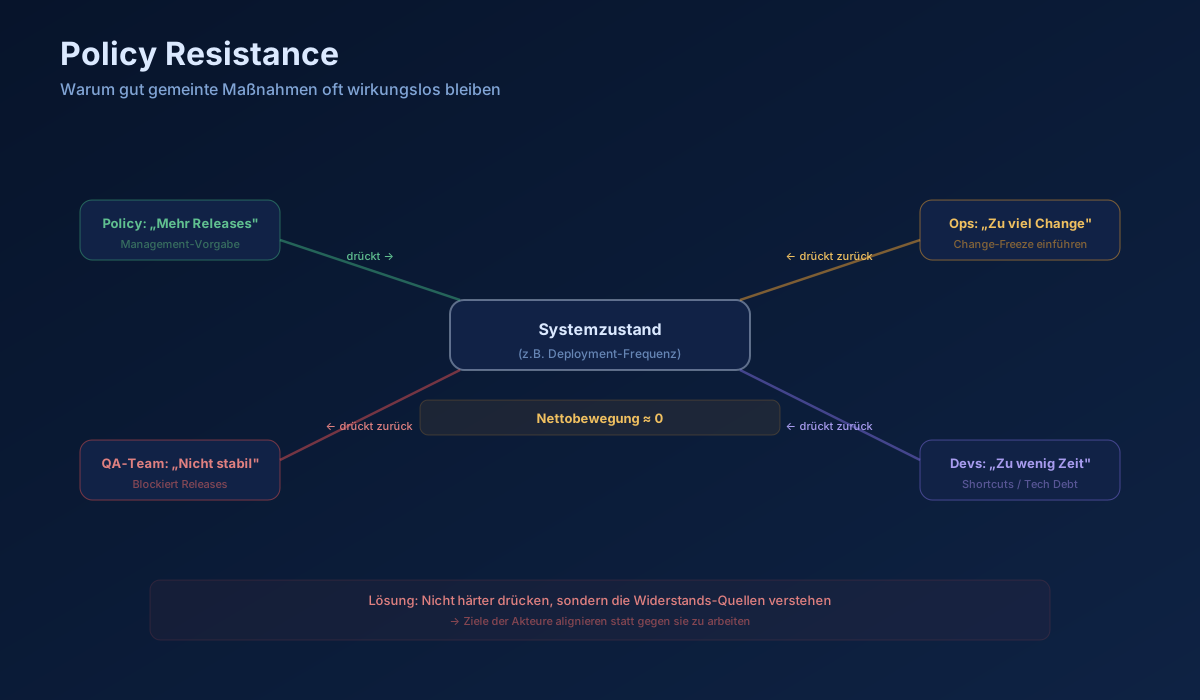
Complex systems often contain a built-in defensive force that counters and blocks even well-intended solution attempts.
Why it matters
Use this concept to explain observable behavior structurally rather than merely naming it.
Next step
Next, check which archetype or diagnostic method makes the pattern visible in the concrete system.

Definition
Policy resistance is the phenomenon in which intervening in a complex system often fails, backfires, or even makes the original problem much worse. It arises when we try to push a system from above with a rigid policy, rule, or tool mandate that conflicts with the internal logic and balancing feedback loops of the actors inside the rest of the system.
System Mechanism
Every functioning system is held together by the balance of many independent actors and interests. When we introduce a new policy, such as mandatory time tracking for every developer, we disturb that status quo. People do not resist out of malice. They activate balancing loops to protect their own goals, such as shipping a project on time. They create workarounds, fictional time entries, or generic booking codes. The policy is absorbed and neutralized, and the system snaps back like a rubber band.
Architecture Example
An enterprise architecture board imposes a new cloud security policy from the top down: all new services must pass through three manual review stages before deployment. Developers react to the resulting bottleneck by avoiding new microservices and instead bloating existing legacy monoliths that are already approved. The policy that was meant to improve security ends up breeding a huge and insecure blob of shadow IT.
Organizational Example
Two departments are merged to reduce cost, and management expects fifteen percent more efficiency. But managers on both sides fear for their status and block one another through endless alignment rounds. Teams spend weeks in uncertainty, productivity drops, and valuable engineers leave. The system is offering maximum resistance to a crude top-down policy.
Diagnostic Questions
1.Which new architecture mandates or tools led teams to invent clever workarounds immediately?
2.Why do the actors in the system have good and rational reasons to behave in the opposite way from what our policy demands?
3.Are we symptomatically fighting employee resistance while leaving the deeper incentive structure unchanged?
Diagram
Why This Concept Helps in Architecture
The cardinal mistake when facing policy resistance is to push harder. When developers build workarounds, management often responds with stricter punishments or more bureaucracy. That only increases resistance. Systemic progress comes from relaxing the tension in the rubber band. Policies must be designed so they align the goals of the actors and pull them in the same direction instead of fighting them.
How to Distinguish It from Similar Topics
Policy resistance is the broad phenomenon of implementation failure in complex systems. Archetypes such as Fixes that Fail and Shifting the Burden are more specific recurring patterns that show exactly how policy resistance unfolds in practice.
How to Use the Concept in Practice
Stop fighting the system and work through participation. Architecture decisions should be embedded bottom-up through communities of practice instead of being dictated by a board. Understand the purpose of the actors. Which existing metrics or goals currently make it rational for a team not to follow your policy? Replace command and control with soft incentives, guardrails, paved roads, and golden paths.
First Implementation Steps
A good architect designs the paved road so that following the secure architecture is easier than building a workaround. That prevents policy resistance before it starts.
How You Recognize Impact
Does our governance model mainly rely on rules, prohibitions, and controls, which carry high resistance risk, or on enablement and support for product teams?
Sources
Donella Meadows — Thinking in Systems, Kap. 5: Policy Resistance
Authors & Books
Go to referencesRelevant references for Policy Resistance.
Concept Visual
Policy Resistance: System reacts with delay and circumvents interventions.