Mental Models
Mental models are deeply rooted assumptions that determine which system signals we notice at all and how we make decisions.
Why it matters
Use this concept to explain observable behavior structurally rather than merely naming it.
Next step
Next, check which archetype or diagnostic method makes the pattern visible in the concrete system.

Definition
Mental models are the deeply embedded pictures, assumptions, and generalizations we hold about how the world, or a software system, works. They act like invisible filters. Everything we see, hear, or measure is interpreted through them. In systems thinking, mental models matter because decisions are never made on the basis of objective reality alone. They are made on the basis of the reality decision-makers believe they understand.
System Mechanism
Mental models shape our actions, and our actions produce results in the system. But because the system is complex, real outcomes often do not match the simplified model in our heads. Instead of updating the model, many organizations fall into defensive routines and try to force the system to fit their assumptions. That creates heavy friction and blocks genuine adaptation.
Architecture Example
An architect carries the mental model that microservices are always the best answer for scaling. Based on that assumption, a team builds a simple internal CRUD application as twelve microservices. The app becomes unstable and deployments take hours. The system is clearly saying that the chosen architecture does not fit the problem. But because the architect's model cannot absorb that feedback, he interprets the failure as lack of discipline in Kubernetes manifests instead. The faulty mental model blocks learning.
Organizational Example
Management operates from the mental model that employees work hard only when controlled through strict individual targets. When software quality drops, the logical response inside that model is to tighten KPIs and punishments. In reality, quality is suffering because teamwork is weak and those individual KPIs are damageing collaboration. The management model actively worsens the system.
Diagnostic Questions
1.Which unproven assumptions, such as "this is just how things work here" or "stack X is always better," are guiding our most expensive decisions?
2.Where are user feedback or measured signals regularly ignored or reinterpreted because they do not fit our plan?
3.Does the team have rituals that surface whether everyone is operating from the same mental picture of the system?
Diagram
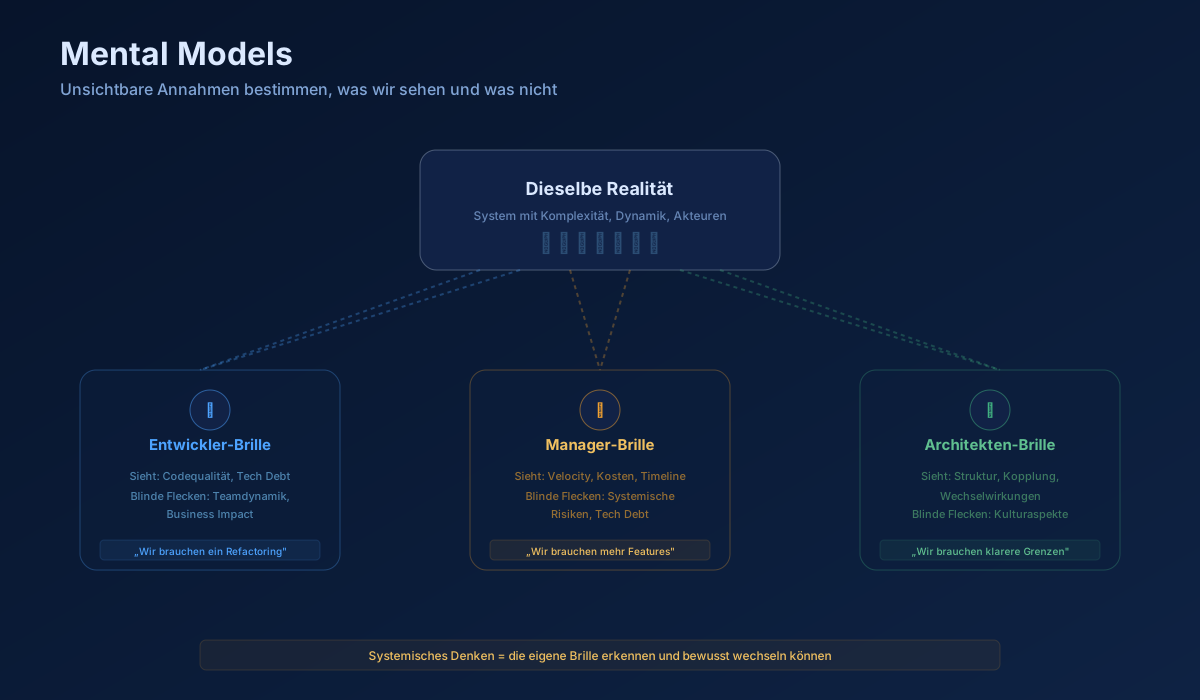
Why This Concept Helps in Architecture
One of the strongest leverage points in organizations is making mental models visible and changing them. As long as a team believes speed and quality are a trade-off, it will never invest seriously in test automation. Once the model shifts to quality drives sustainable speed, decision patterns change radically. Shared causal loop diagrams are one practical way to enable that shift.
How to Distinguish It from Similar Topics
Unlike feedback loops or delays, which describe mechanical properties of a system, mental models are properties of the actors inside the system. They connect objective conditions with subjective architecture decisions.
How to Use the Concept in Practice
Make the invisible visible. When two senior engineers argue bitterly about a database technology, they are often not fighting over facts but over competing mental models, such as "consistency matters most" versus "time to market matters most." Bring the discussion up to that level and force assumptions into explicit form, for example in ADRs.
First Implementation Steps
Use tools such as the Ladder of Inference in meetings to trace how someone moved from raw data to strong convictions and assumptions before those convictions become the basis for system decisions.
How You Recognize Impact
In the last architecture debate, did we clarify which assumptions were being treated as unquestionable facts even though they were actually testable hypotheses?
Sources
Peter Senge — The Fifth Discipline, Kap. 10: Mental Models
Chris Argyris — Overcoming Organizational Defenses (Prentice Hall, 1990)
Authors & Books
Go to referencesRelevant references for Mental Models.
Concept Visual
Mental Models: Assumptions influence decisions and reproduce results.