Leverage
Leverage refers to points in a system where small, well-placed interventions create deep and lasting effects.
Why it matters
Use this concept to explain observable behavior structurally rather than merely naming it.
Next step
Next, check which archetype or diagnostic method makes the pattern visible in the concrete system.

Definition
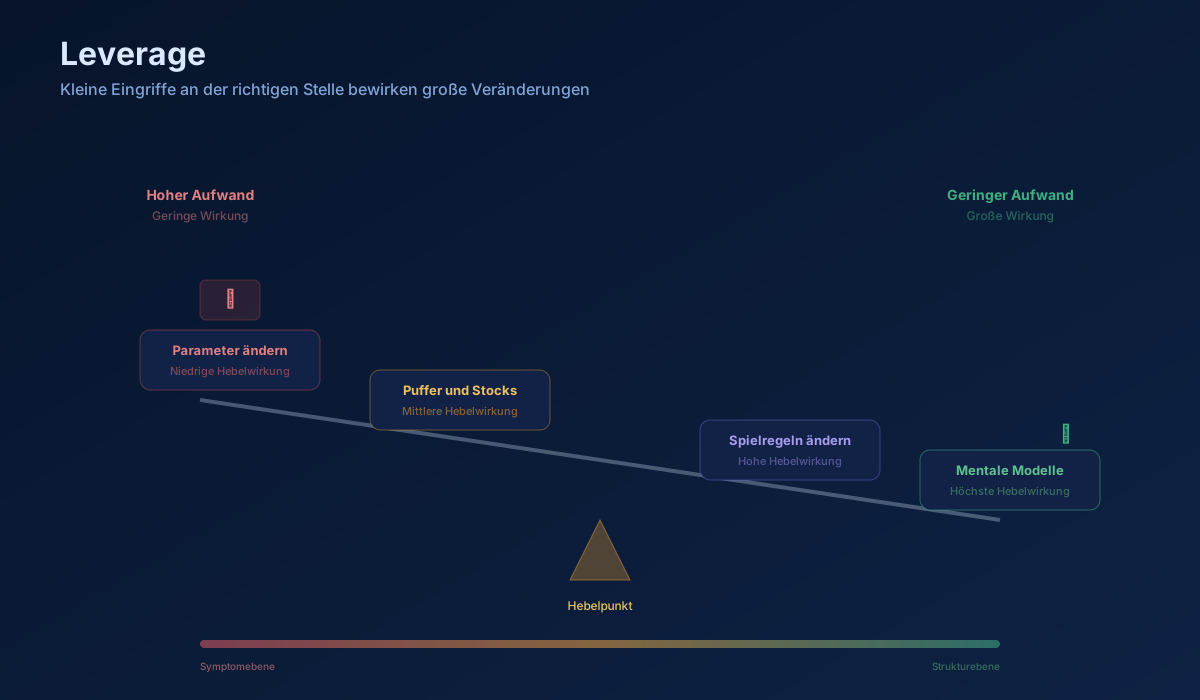
Leverage points are strategic intervention points inside a complex system. If you pull on a low-leverage point, you invest large amounts of effort and gain almost no change in system behavior. If you find a high-leverage point, a small adjustment, such as changing a metric or an information flow, can trigger structural change and durable improvement.
System Mechanism
Donella Meadows classified twelve levels of leverage. Parameters and numbers, such as materials, buffer sizes, or tax rates, are among the weakest points. Structural changes such as shortening feedback delays or changing rules and incentives are far more influential. The strongest leverage points lie in changing the purpose of the system or even the underlying paradigm, meaning the mindset of the people designing and leading it.
Architecture Example
Suppose cloud costs are exploding. A low-leverage intervention is to tell every developer to reduce storage usage by ten percent. That creates work but rarely produces durable impact. A high-leverage intervention is to integrate cloud cost dashboards directly into each team's CI/CD overview so the people creating the cost can see the consequences of their architecture decisions in real time and adjust immediately.
Organizational Example
Two departments are in permanent conflict over engineering capacity. A low-leverage response is to increase the IT budget by five percent and buy more contractor hours. A high-leverage response is to reorganize away from department budgets and toward cross-functional value streams so both groups are measured against the same customer outcome. The structural need for conflict largely disappears.
Diagnostic Questions
1.Are we currently turning knobs on symptoms and numbers that will not change the core behavior of the project?
2.Who in our system has access to critical feedback information, and who would need that information to improve behavior at the source?
3.Is the unspoken paradigm, such as "features first, stability later," the real root of our architecture problems?
Diagram
Why This Concept Helps in Architecture
Systems thinkers intuitively search for high-leverage points. The difficult part is that those points are often counterintuitive. We are trained to manipulate visible numbers and symptoms. Real leverage often requires stepping back, drawing the whole system as a causal loop diagram, and redesigning information flows, delays, or goal metrics such as OKRs.
How to Distinguish It from Similar Topics
The search for leverage forces you to map feedback loops and interdependence so you can find the point where a small move creates the strongest multiplier. That stands in direct contrast to operational symptom treatment.
How to Use the Concept in Practice
Before major decisions, consciously use Meadows's leverage scale. Before investing millions in a new technical architecture, ask whether the same problem could be addressed by improving feedback to teams or by changing the incentives of product owners. Often the most effective move is not the most visible one.
First Implementation Steps
Remember that pushing harder on a low-leverage point can create escalation. If a solution demands huge force, budget, and meetings, you have probably chosen the wrong lever.
How You Recognize Impact
Before expensive hardware or cloud changes were approved, were structural or information-based alternatives seriously evaluated?
Sources
Donella Meadows — Leverage Points: Places to Intervene in a System (1999)
Authors & Books
Go to referencesRelevant references for Leverage.
Concept Visual
Leverage: Small interventions at leverage points create a disproportionate effect.