Attractiveness Principle
A rising product or team attracts so much demand that quality collapses and the very source of its attractiveness gets damaged.
Why it matters
An archetype helps you recognize recurring dynamics behind local symptoms.
Next step
Next, move into a diagnostic method to test the suspected structure against observations.

Description
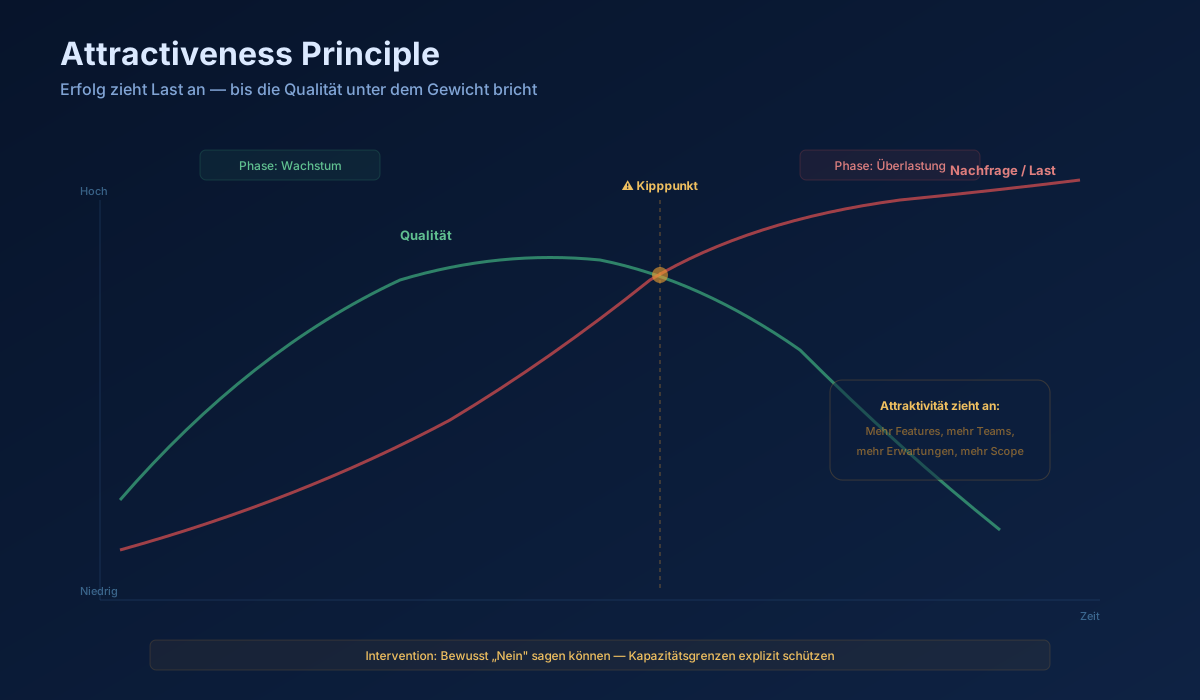
The Attractiveness Principle is a variation of the Limits to Growth archetype. It says that every fast-growing, highly successful construct eventually runs into hard limits. The special twist is that a system usually cannot keep every growth factor at its maximum level at the same time. A product that grows because it is extremely fast, cheap, and feature rich will eventually have to sacrifice one or more of those qualities in order to avoid collapse. If a company does not consciously choose which quality is allowed to get worse, the system will choose blindly, usually with dramatic consequences.
Feedback Loops
The engine is a large reinforcing loop: good product, more users, more revenue, better product. That loop drives the system into several parallel balancing loops, such as limits in server capacity, support capacity, and developer cognition. The harder the growth engine pushes, the more simple those capacity limits strike back and slow the growth down.
Architecture Example
A small startup builds a monolithic SaaS application. Because it can ship new features at high speed, time to market becomes its greatest source of attractiveness and thousands of new customers rush in. The database starts bursting at the seams, response times rise sharply, and performance drops. Developers try to rescue performance, which activates one balancing loop, but doing so forces them to slow feature velocity, reducing another attractive dimension. Next customer support collapses under the weight of bug reports. The company cannot scale performance, feature speed, and support quality all at once. It must consciously decide which quality will worsen in order to keep growing.
Organizational Example
A certain platform engineering team does excellent work and is extremely helpful, almost white-glove service. That makes it wildly popular across IT. Very quickly hundreds of feature teams start dumping their infrastructure requests onto that small group. The platform team is crushed by its own attractiveness. Because it does not want to say no, ticket response times deteriorate badly. Developers become furious with the very team they once admired. Unmanaged demand damages the offering.
Diagnostic Questions
1.Have we built an internal paved road that is so brilliant but so unscalable that the responsible team is now overloaded under the weight of adoption?
2.As management, are we refusing to make trade-offs on a sales argument such as speed, price, or quality and thereby wrecking the whole system?
3.Which hidden capacity limits, such as the speed of onboarding new developers, will simple choke our current hyperscaling in six months?
Diagram
How to Recognize the Pattern in Daily Work
The cybernetic lesson is simple: once the system hits a limit, you cannot keep every ball in the air. Real strategy is not only deciding what you want to be great at. It is also choosing what you will deliberately be less good at for a time. You sometimes have to build intentional brakes into growth, for example waitlists for the product or hard API rate limits, until you are ready to master the next level of system complexity.
What Distinguishes the Pattern from Similar Dynamics
While Limits to Growth often has one obvious limit that gets hit, the Attractiveness Principle is characterized by the painful choice among several competing dimensions of attractiveness, such as price versus performance versus features, that cannibalize one another.
How to Move from Pattern to Response
If your system is close to breaking under its own success:
1.Identify the dimensions that made you attractive, such as speed, quality, accessibility, or low defect rates.
2.Make a conscious architecture-board decision about which quality you will deliberately neglect for the next twelve months, for example no new features for six months, only stability.
3.Communicate that trade-off clearly to stakeholders before the system collapses on its own.
First Next Steps
Use the logic behind the CAP theorem as an explanatory model: in distributed systems it is physically impossible to optimize everything at once. The organization has to choose.
How to Recognize the Pattern with Confidence
Does the fast-growing platform team have a clear threshold, such as a maximum of five onboardings per month, beyond which it simply declines requests in order to protect service quality?
Sources
The Systems Thinker: The Attractiveness Principle
Authors & Books
Go to referencesRelevant references for Attractiveness Principle.
Continue reading
Explore related topics from Archetypes