Knowledge Graph Tooling
Graph-based knowledge bases that connect code, architecture decisions, and ownership in one searchable network.
Why it matters
Tools help make systems thinking practical in analysis, communication, and implementation.
Next step
Always combine the tool with a diagnostic or intervention logic instead of using it in isolation.

System Purpose
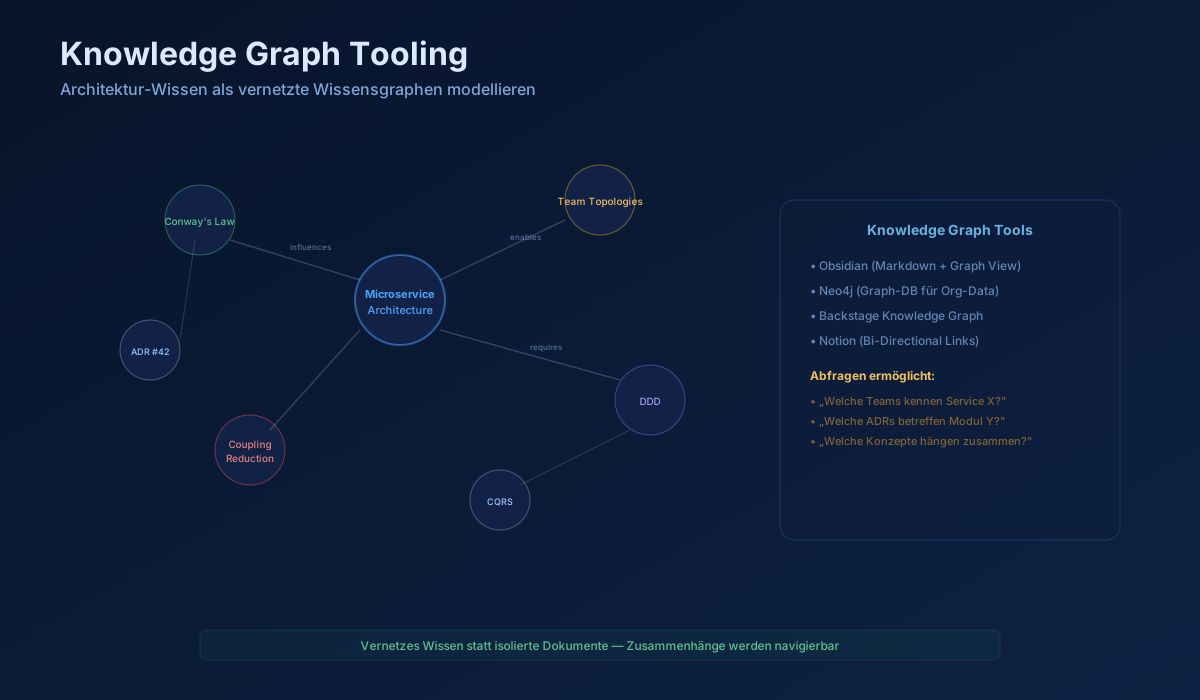
In traditional companies, knowledge is organized in a dead, fragmented way: code lives in GitHub, architecture diagrams in Confluence, team structures in HR systems, and incidents in Jira. When a developer asks, "Which teams would be affected by an outage in the Kafka queue?" they must search across four systems and then ask around. A knowledge graph damages those silos. It stores knowledge not as hierarchical folders but as a network of nodes and edges. It connects the concept "Service A" directly to "Lead Developer Sarah" and to "Tuesday outage" in one semantic structure.
Tool Mechanics
1.Personal knowledge graphs: Tools such as Obsidian, Roam, or Logseq help an architect maintain linked Markdown notes with backlinks such as [[Kafka Migration]]. The tool automatically generates a star map of connected thoughts.
2.Enterprise knowledge graphs: Tools such as Neo4j or enterprise catalogs like Backstage ingest the company's full ecosystem. With a Cypher query such as MATCH (Team)-[:OWNS]->(Microservice)-[:USES]->(Database) WHERE Database.version='Postgres 9' RETURN Team, you can find within milliseconds which human team must upgrade the outdated database.
Architecture Use
Knowledge graphs are a powerful weapon against knowledge erosion, the organization's forgetting when senior people leave. When architecture is documented in the graph, discoverability emerges. A junior searches for "authentication" and immediately sees the relevant Architecture Decision Record (ADR), the responsible security champion, and the Slack channel where the topic is discussed. The junior navigates the company's semantic web instead of wandering between disconnected tools.
Limits and Risks
GIGO, again. An enterprise knowledge graph is not a magical problem solver. If the data quality coming from Jira or your repositories is poor, your Neo4j graph is just high-resolution graph-shaped garbage. Maintaining an enterprise graph requires deliberate data governance. Personal knowledge graphs such as Obsidian suffer from bicycle shedding as well: architects can spend two hours a day beautifying notes and installing plugins instead of solving actual architecture problems.
Diagram
Differentiation
Confluence and wikis are documents in folders: hierarchical, rigid, and hard to search. Dependency Graph Analysis scans only bare source code. Knowledge Graph Tooling is holistic. It enforces semantic links between technology, people, and history so those elements become inseparable graph nodes.
Decision and Practice Guide
Do not force architects to think in forms. Force them to think in links. Replace rigid wiki structures with networked note-taking. If you choose an enterprise graph, start extremely small, for example by linking only "service" to "owning team." A large graph that tries to capture everything on day one will implode under the complexity of internal data silos and burn two years of development time.
Sources
Obsidian — Knowledge Management with Graph View
Authors & Books
Go to referencesRelevant references for Knowledge Graph Tooling.
Continue reading
Explore related topics from Tooling
Agent-Based Modeling Tools
Tools that simulate the behavior of many autonomous actors — for example how teams respond to new architecture rules — to surface emergent effects before rollout.
Architecture Observability Tooling
Traces, metrics, and logs as architecture diagnostics: they make gradual structural decay visible before it turns into incidents.