Collaborative Mapping Workflows
Facilitation practices for architecture workshops: using whiteboards, graphs, and models so insights turn into actionable decisions.
Why it matters
Tools help make systems thinking practical in analysis, communication, and implementation.
Next step
Always combine the tool with a diagnostic or intervention logic instead of using it in isolation.

System Purpose
Tools such as Miro, Kumu, or Draw.io are worthless without the rituals that animate them. The most common failure mode for systems thinking in companies is the orphaned-map effect. A team spends three brilliant days at an offsite, models the entire architecture crisis in a beautiful causal loop diagram, celebrates itself, goes home, and never looks at the map again. Six months later the crisis is worse than before. Collaborative Mapping Workflows are the operating manual, the "how," that ties modeling tools directly to the company's real financial decision routines.
Tool Mechanics
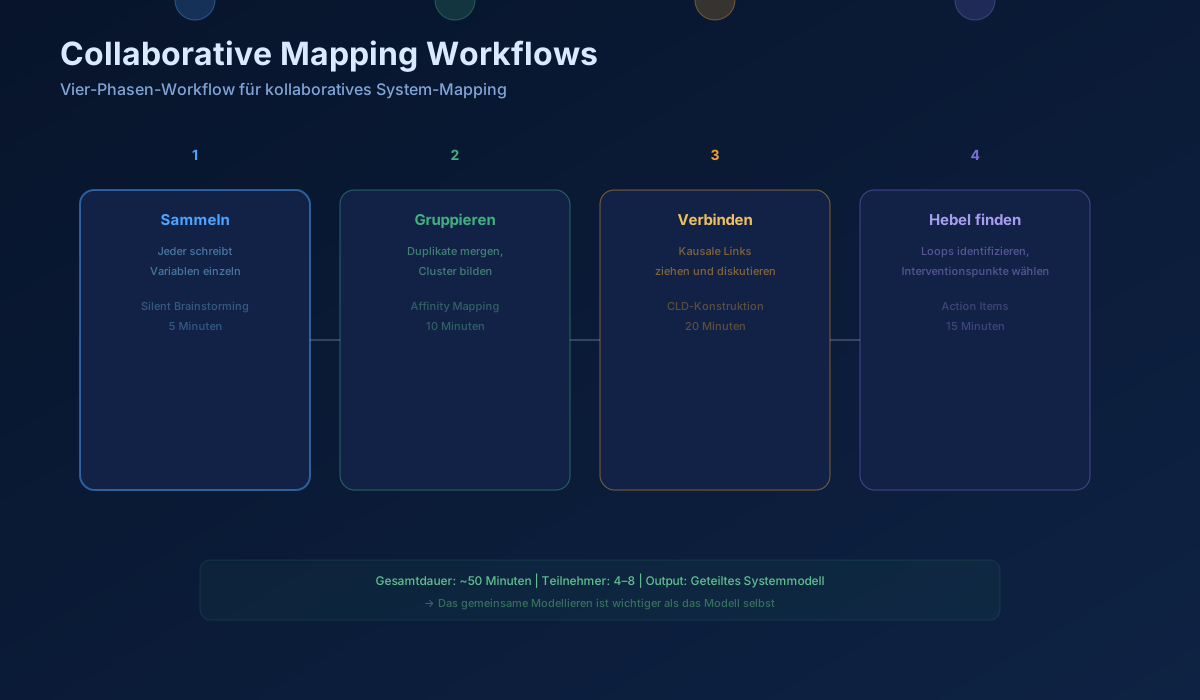
A robust workflow contains three non-negotiable phases:
1.Divergence (collecting): Asynchronous. All stakeholders dump their symptoms onto the canvas without filtering. No architect is allowed to force tech jargon such as UML or REST at this stage.
2.Emergence (sensemaking): Synchronous. The causal-loop workshop. Here the architect acts as facilitator, not dictator. The team is pushed to discover the arrows and causal links between the collected notes.
3.Convergence (the razor): The hard action item. The workshop must not end until the identified architectural bottleneck has been transformed into a concrete Architecture Decision Record (ADR) and a Jira epic with assigned budget.
Architecture Use
Mapping workflows are one of the strongest countermeasures against the IT echo chamber. When architects map architecture problems only among themselves, they often invent technical problems, the missing Kafka queue is a classic example, even though the real bottleneck is a budget approval process in controlling. The workflow forces the architect, lead developer, product owner, and ideally a sales manager onto the same Miro board until a shared and accurate system picture emerges.
Limits and Risks
Tooling as an excuse for inaction, or paralysis by analysis. Some teams perfect architecture graphs for weeks. They add tiny edge cases, debate box colors, and get lost in geometry. The purpose of collaborative mapping is never to create the perfect model. The IT universe is too complex for that anyway. The purpose of the map is to create enough confidence for the next architectural decision in reality. Once the map achieves that, the mapping phase is over.
Diagram
Differentiation
Causal Loop Tools such as Kumu are the hammer and the nail. Collaborative Mapping Workflows are the building plans and safety rules that keep the workers from smashing their own thumbs. The best software is useless without the cybernetic process around it.
Decision and Practice Guide
Feed the map as living documentation. An architecture graph that has not been updated in a year is a dangerous lie. Make review of the central system map a hard part of the C-level quarterly planning calendar. When the CTO allocates the Q3 budget, the map of bottlenecks must be on screen. If it is absent, you do not have a workflow.
Sources
Daniel Kim — Systems Thinking Tools (Pegasus Communications)
Peter Senge — The Fifth Discipline Fieldbook, Ch. 5: Collaborative Modeling
David Stroh — Systems Thinking for Social Change (Chelsea Green, 2015)
Authors & Books
Go to referencesRelevant references for Collaborative Mapping Workflows.
Continue reading
Explore related topics from Tooling
Agent-Based Modeling Tools
Tools that simulate the behavior of many autonomous actors — for example how teams respond to new architecture rules — to surface emergent effects before rollout.
Architecture Observability Tooling
Traces, metrics, and logs as architecture diagnostics: they make gradual structural decay visible before it turns into incidents.