Rich Picture Mapping
A highly visual, almost comic-like tool from Soft Systems Methodology for capturing unspoken tensions, culture, and harmful silos in architecture.
Why it matters
Diagnostics turn assumptions into grounded structural hypotheses for architecture and organization.
Next step
After that, derive interventions that specifically change rules, boundaries, or feedback loops.

Purpose
Rich Picture Mapping comes from Peter Checkland's Soft Systems Methodology. It is not a UML diagram and not a C4 diagram. It is an intentionally informal, hand-drawn crowd scene of an organizational crisis. In complex transformations such as a move to cloud native, the biggest blockers are often not missing Kubernetes clusters but fear of job loss, power struggles between departments, and broken communication. Rich Pictures bring those emotional, cultural, and political factors directly onto the architecture whiteboard.
Context of Use
If you enter a deeply broken project as an architect or consultant and hear statements such as "Requirements change every day," "The business does not talk to IT," or "Operations refuses to deploy," this is the moment for a Rich Picture. It belongs at the beginning, before anyone tries to solve the issue technically. Its job is to capture the mess.
Step by Step
1.Take the large canvas: There is no strict syntax and no formal notation, only pens and a board.
2.Draw the actors: Put the stakeholders, such as the CEO, developers, Ops, and users, on the board as simple figures.
3.Add structures and processes: Connect them with thick arrows for official flows and jagged lightning arrows for recurring conflict.
4.Add thought bubbles: Show what people are really thinking. What does the Ops team truly think about management's agile manifesto?
5.Mark walls and swords: Highlight political blockades and silo borders with warning signs or barriers.
Example
A traditional bank is building a neo-banking app. The project is close to collapse because nothing reaches production. A Rich Picture is drawn with the team. At the top sits the innovation hub in a pink cloud dreaming about crypto. In the basement, core-banking mainframe operators sweat under a mountain labeled regulation and audit, with lightning bolts striking every time the neo team asks for an API update. The map shows that no technical layer will solve this. The real problem is a culture clash between two worlds actively fighting each other. The picture makes it legitimate to raise that taboo in a management review.
Diagram
How Diagnosis Turns into Action
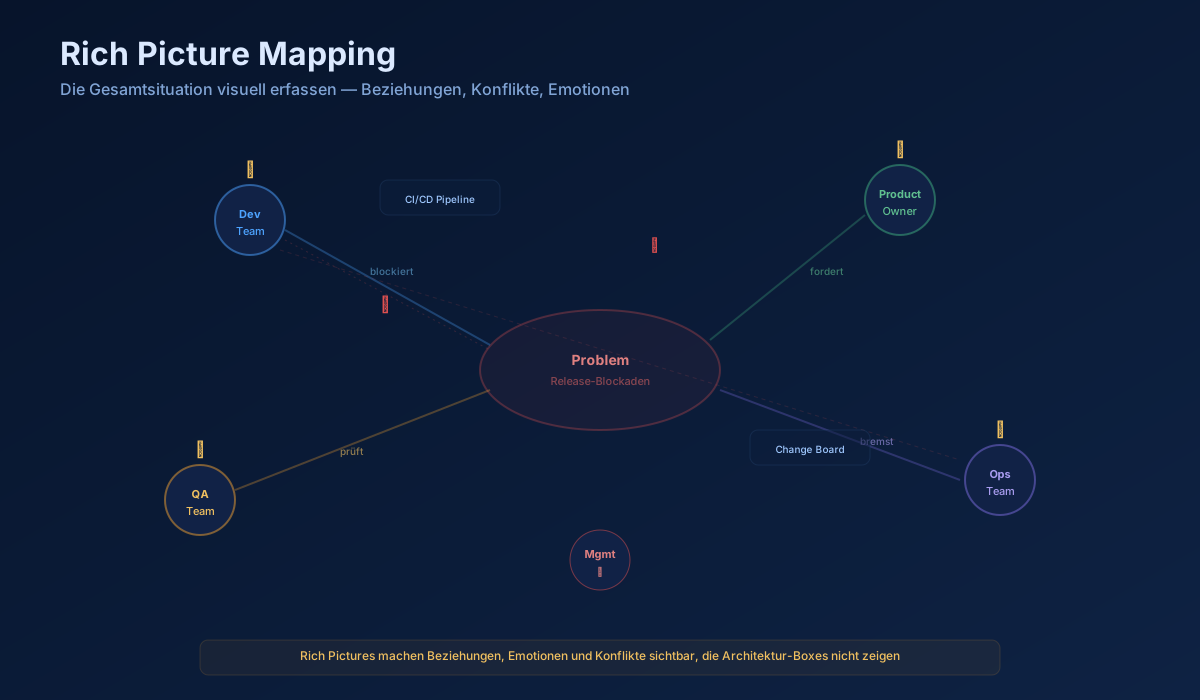
Software developers often dislike Rich Pictures at first because it feels like kindergarten drawing. That is exactly where the power lies. A C4 architecture diagram can feel intimidating, elite, and sterile. It pushes emotion away. A Rich Picture is chaotic and democratic. Suddenly the junior tester dares to jump in and draw a huge red fear sign next to the CI/CD pipeline. The informality breaks the protective shell behind which harmful management structures often hide.
When This Method Fits Best
Unlike Dependency Mapping, which counts API dependencies in a hard and logical way, Rich Picture Mapping is soft, sociological, and unstructured. It is the direct opposite of Root Definition Analysis, which tries to compress the swamp of reality into extremely precise logical sentences.
How to Use the Diagnosis in Everyday Work
If everyone in a requirements-engineering kickoff is staring tiredly at spreadsheets, stop the meeting. Hand markers to the ten people in the room and compare the ten individual Rich Pictures they create. You will be shocked by how differently frontend, backend, and product people perceive the existing architecture and its enemies inside the company. Agree on a shared picture of the conflict before writing code.
First Analysis Steps
Do not draw solutions into a Rich Picture. It is a pure snapshot of the unstructured problem situation. Allow and encourage humor. Caricatures of the angry CTO or the sleeping database admin often make the elephant in the room discussable without turning into personal accusation.
How You Recognize a Useful Diagnosis
Before the billion-euro rollout of your new microservice strategy, did anyone ever draw a Rich Picture that documented the real frustration, overload, and tool fatigue inside the developer teams?
Sources
Peter Checkland — Systems Thinking, Systems Practice (Wiley, 1981)
Authors & Books
Go to referencesRelevant references for Rich Picture Mapping.
Example analysis artifact
Rich picture with tensions, actors and areas of conflict in a common situation picture.
Continue reading
Explore related topics from Diagnostics
Assumption Mapping
A diagnostic tool for strictly exposing, categorizing, and deliberately testing unspoken assumptions in architecture design.
Behaviour over Time Charts
A visualization tool that reveals how system variables such as metrics, debt, or productivity change over time.