Policy Structure Mapping
A diagnostic method for exposing hidden decision rules that govern the behavior of an entire software organization.
Why it matters
Diagnostics turn assumptions into grounded structural hypotheses for architecture and organization.
Next step
After that, derive interventions that specifically change rules, boundaries, or feedback loops.

Purpose
In systems thinking, especially in system dynamics, a policy is not just a written company guideline in the intranet. It is the unwritten equation by which actors make daily decisions. Policy Structure Mapping explains why smart developers often build unsuitable systems. It shifts attention away from written code and toward the reward and punishment rules that produce that code. It exposes the fact that architectural erosion is rarely a technical problem and almost always a rational policy problem.
Context of Use
If management says, "We decided six months ago to reduce technical debt, so why is the team still writing dirty code?" then it is time for Policy Structure Mapping. The written policy says quality, but the lived policy says feature delivery at any price. The map makes that contradiction visible.
Step by Step
1.Name the symptom: What undesirable behavior do you see in the organization, for example nobody writes documentation?
2.Map the information flows: What signals does the actor receive at the moment of decision? The developer sees that release is tomorrow and the sprint is bleeding.
3.Write the actual policy: Formulate the hidden if-then rule the actor is really following. For example: if feature pressure exceeds shame, skip unit tests.
4.Find the leverage point: Which information inputs can we change structurally so the actor wants to make a better decision?
Example
The architecture is decaying because platform teams keep building one-off features into the core instead of offering clean APIs. The platform engineer's actual policy is: "If sales applies pressure, I put the hack directly into my backend because that is faster than spending two weeks negotiating an interface with the frontend team." The architect changes the information environment. Ticket speed is no longer the key metric for the platform team. The bonus rule becomes: "Number of self-service APIs that external teams can use autonomously." The team's behavior flips within a week.
Diagram
How Diagnosis Turns into Action
Architects often fail because they confuse appeals with policies. A motivational speech at an all-hands changes nothing about the structure. A policy is a wired feedback loop. If CTOs preach that deployments must be more stable but still cut bonuses when a new feature is late to market, the financial policy always beats the moral appeal. Policy Structure Mapping brings that hypocrisy onto the whiteboard in diagram form.
When This Method Fits Best
Causal Loop Diagrams show the entire web of variables. Policy Structure Mapping zooms in like a microscope on one specific node in that web, the human decision, and examines which levers feed into it.
How to Use the Diagnosis in Everyday Work
Never accept "human error" as a complete explanation in a post-mortem. If a senior developer deleted the database because they did not test the script locally, ask which policy produced that behavior. Were local test environments removed to save money? Does the organization celebrate firefighting self-service in production instead of rewarding boring stability? The system produced exactly the behavior it was configured to produce.
First Analysis Steps
In policy workshops, draw information arrows separately from physical-action arrows. A bad decision is almost always made because the information arrow about the negative architecture consequences, such as increased user latency, never reaches the developer's dashboard in time.
How You Recognize a Useful Diagnosis
Can you openly put your company's real promotion and bonus logic on the architecture board and test whether those financial rules are secretly sabotaging your technical design principles such as decoupling?
Sources
John Sterman — Business Dynamics, Chapter 9: Policy Structure (McGraw-Hill, 2000)
Donella Meadows — Thinking in Systems, Chapter 5: System Traps and Policies
Authors & Books
Go to referencesRelevant references for Policy Structure Mapping.
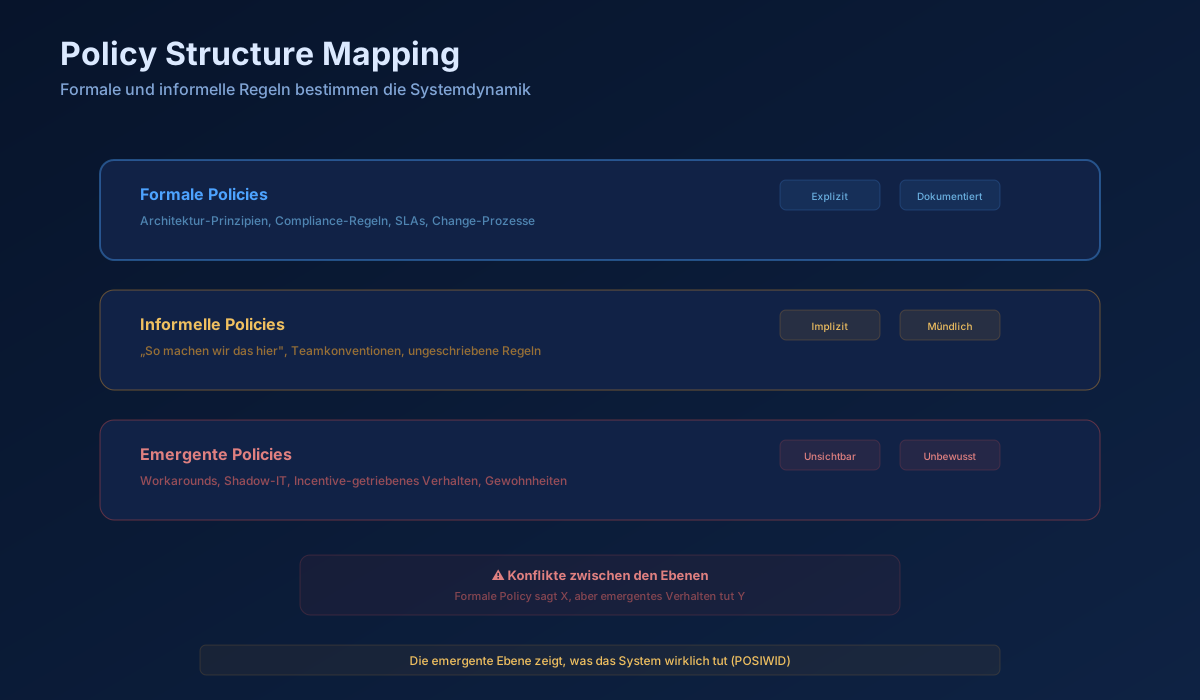
Example analysis artifact
Policy structure map that connects decision rules to observable system effects.
Continue reading
Explore related topics from Diagnostics
Assumption Mapping
A diagnostic tool for strictly exposing, categorizing, and deliberately testing unspoken assumptions in architecture design.
Behaviour over Time Charts
A visualization tool that reveals how system variables such as metrics, debt, or productivity change over time.