CATWOE Analysis
A checklist tool from Soft Systems Methodology for decoding the competing worldviews and interests behind a conflict situation.
Why it matters
Diagnostics turn assumptions into grounded structural hypotheses for architecture and organization.
Next step
After that, derive interventions that specifically change rules, boundaries, or feedback loops.

Purpose
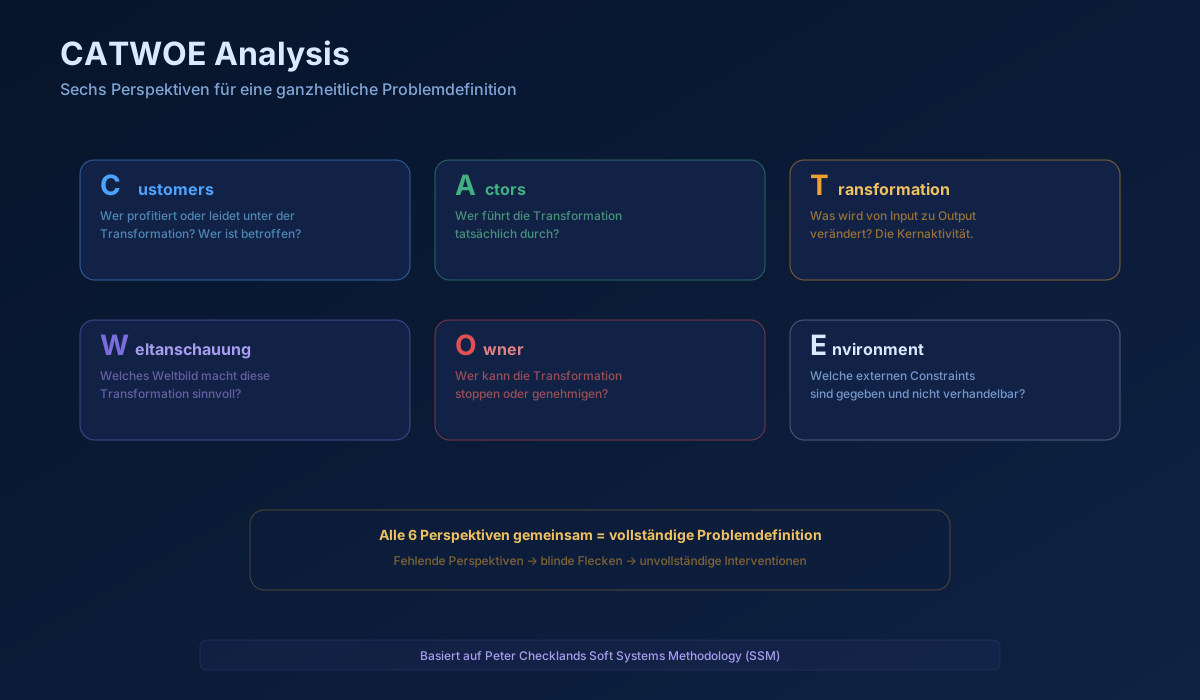
CATWOE, short for Customers, Actors, Transformation, Worldview, Owner, and Environmental constraints, is a highly structured diagnostic template from Peter Checkland's Soft Systems Methodology. In IT, departments often collide because they perceive the same technical system in fundamentally different ways. Finance sees AWS as a cost disaster, while engineering sees AWS as the holy grail of speed. CATWOE breaks open such conflicts by dissecting the system into six sharply defined sociotechnical perspectives.
Context of Use
The method shines in the early stages of requirements engineering and in stalled migration programs. When stakeholders are trapped in endless meetings arguing about "the architecture" without anyone defining which of the fifty competing truths about the system is being examined, CATWOE forces every group to put its mental model on the table.
Step by Step
The system is examined through the six mandatory elements:
1.C (Customers): Who benefits from or suffers under the system, such as end users or the CEO?
2.A (Actors): Who performs the system operationally, such as feature developers or DevOps staff?
3.T (Transformation): What core process turns input into output, for example raw code into live software?
4.W (Worldview): The most important point. What philosophy makes this transformation meaningful, such as agility over security?
5.O (Owner): Who has the ultimate power to shut the system down tomorrow with one decision?
6.E (Environmental Constraints): What rigid external rules impose limits, such as GDPR, legacy mainframes, or budget ceilings?
Example
A team is asked to build a new customer data platform. The project keeps exploding into conflict. CATWOE exposes why:
The architecture team has the worldview that the platform must be a technically pure masterpiece of decoupling and Kafka topics.
The marketing team has the worldview that it needs campaign IDs in Excel by the day after tomorrow and does not care about the rest.
The diagnosis shows that the conflict is not bad technology but incompatible worldviews that were never translated into a shared transformation goal. The architects built the wrong system for the right question.
Diagram
How Diagnosis Turns into Action
CATWOE is powerful against the engineer's disease of jumping straight to the transformation layer. Software architects often start tinkering with microservices, Docker, or Kubernetes while forgetting to involve the owner or to account for the environmental constraints of operations teams, such as ISO 27001 certification. A system that works perfectly in the lab will fail in practice if it violates the worldview of the people who must repair it at 2 a.m.
When This Method Fits Best
While the Iceberg Model explores the depth behind events, CATWOE cuts horizontally through the operational field like an MRI scanner and forces the sociological roles into the spotlight.
How to Use the Diagnosis in Everyday Work
Before the first line of code in a multimillion-euro initiative is written, the architecture committee should require a CATWOE matrix signed off by the heads of the key departments. If marketing and security cannot agree on the worldview field, developers should not start building. Otherwise they will be crushed between the fronts.
First Analysis Steps
Use CATWOE during event storming. When domain experts place events on the wall, fire CATWOE questions like a sniper at the blind spots. Ask, for example: "Environmental constraints: does the regulator even allow us to emit this event asynchronously from this server?"
How You Recognize a Useful Diagnosis
When planning a new internal developer platform, have you identified who truly owns the veto if the actors running the platform and the customers using it fall into open conflict?
Sources
Peter Checkland — Systems Thinking, Systems Practice (Wiley, 1981)
Authors & Books
Go to referencesRelevant references for CATWOE Analysis.
Example analysis artifact
CATWOE canvas with six perspectives on those affected, actors, transformation and environmental conditions.
Continue reading
Explore related topics from Diagnostics
Assumption Mapping
A diagnostic tool for strictly exposing, categorizing, and deliberately testing unspoken assumptions in architecture design.
Behaviour over Time Charts
A visualization tool that reveals how system variables such as metrics, debt, or productivity change over time.